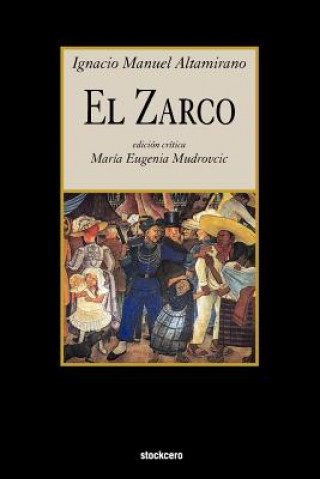
Książka Zarco Ignacio Manuel Altamirano

Zarco

Język: Hiszpański
Oprawa: Miękka
Wydawca: StockCERO
Dostępność: Dostępna u dostawcy
Wysyłamy za 9-15 dni
93.47
El Zarco by Ignacio Atamirano in a US printed edition with preliminary study and notes by Maria Euge...


Informacje o książce

Język
Hiszpański
Oprawa
Książka - Miękka
Data wydania
2012
strony
204
EAN
9781934768556
ISBN
9781934768556
Enbook ID
08876337
Wydawca
Waga
316
Wymiary
152 x 231 x 19

Pełny opis

El Zarco by Ignacio Atamirano in a US printed edition with preliminary study and notes by Maria Eugenia Mudrovcic Ignacio Manuel Altamirano's posthumous novel, El Zarco (1901), is much more than a novel about bandits. Written amidst the «pax porfiriana», at the height of Altamirano's reputation within the cultural elite, the novel is a narrative that deals with the chaos and the banditry that prevailed in the 1860s to celebrate the insertion of Mexico into the international markets undertaken by Porfirio Díaz. Considered to be «the first Mexican novel» because of its carefully constructed structure, El Zarco is also "original" in its approach to race: green-eyed white characters are the villains, while the heroes are Indian or mestizos. What makes a heroe, however, is not a matter of race, but the strict adherence to honor, family and hard work, the «civil» values guiding the actions and the ethos of each and every good citizen or "hombre de bien" of Yautepec. The nineteenth century bourgeois obsession with "crime" emerges in El Zarco as the matrix of the two stories that end up being one: "crime" is the cause for the fear and «insecurity» that paralyze Yautepec middle classes as well as the reason for the glorification of the rural police. Altamirano presents the «good love» between Nicolas and Pilar as a counternarrative of the sexually undisciplined story of lust enacted by Manuela and el Zarco. But this narrative line seems to be, nonetheless, only a frame to celebrate Sanchez Chagollan as the heroic founding father of the police created by Benito Juárez in 1861 that later became an icon of the institutional order of the Diaz regime. In the study that introduces this edition, Maria Eugenia Mudrovcic reads the «unorthodoxies» of Altamirano's novel as part of the propaganda apparatus set by Porfirio Diaz in his effort to change the image of Mexico as a «bandit nation» that dominated the press at the time. Why Altamirano talks of «violence» in «times of peace», thus, becomes the starting-point for a reading of El Zarco that pays attention not so much to bandits but rather to the police that was created as the only way to combat them.

Możesz być zainteresowany

69.71
116.55

On Becoming an Alchemist

Catherine MacCoun
90.45

Mobile Modernity

Todd Samuel Presner
308.86
64.94

Klienci, którzy kupili tę książkę, kupili również

Window

Anto Krajina
131.35
48.78
128.33

Shakespeare's Theater

Ashley Horace Thorndike
114.50
103.99
113.72
1 146.08
29.40

Gospel of Luke

Lawrence R Farley
79.84

Memory Activism

Yifat Gutman
471.18