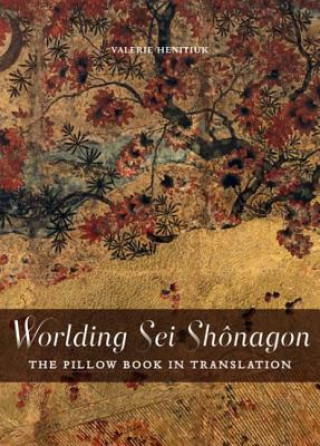
The Makura no Soshi, or The Pillow Book as it is generally known in English, is a collection of personal reflections and anecdotes about life in the Japanese royal court composed around the turn of the eleventh century by a woman known as Sei Shonagon. Its opening section, which begins haru wa akebono, or "spring, dawn," is arguably the single most famous passage in Japanese literature. Throughout its long life, The Pillow Book has been translated countless times. It has captured the European imagination with its lyrical style, compelling images and the striking personal voice of its author. Worlding Sei Shonagon guides the reader through the remarkable translation history of The Pillow Book in the West, gathering almost fifty translations of the "spring, dawn" passage, which span one-hundred-and-thirty-five years and sixteen languages. Many of the translations are made readily available for the first time in this study.
The versions collected in Worlding Sei Shonagon are an enlightening example of the many ways in which translations can differ from their source text, undermining the idea of translation as the straightforward transfer of meaning from one language to another, one culture to another. By tracing the often convoluted trajectory through which a once wholly foreign literary work becomes domesticated-or resists domestication-this compilation also exposes the various historical, ideological or other forces that inevitably shape our experience of literature, for better or for worse.The Makura no Soshi, or The Pillow Book as it is generally known in English, is a collection of personal reflections and anecdotes about life in the Japanese royal court composed around the turn of the eleventh century by a woman known as Sei Shonagon. Its opening section, which begins haru wa akebono, or "spring, dawn," is arguably the single most famous passage in Japanese literature. Throughout its long life, The Pillow Book has been translated countless times. It has captured the European imagination with its lyrical style, compelling images and the striking personal voice of its author.
Worlding Sei Shonagon guides the reader through the remarkable translation history of The Pillow Book in the West, gathering almost fifty translations of the "spring, dawn" passage, which span one-hundred-and-thirty-five years and sixteen languages. Many of the translations are made readily available for the first time in this study. The versions collected in Worlding Sei Shonagon are an enlightening example of the many ways in which translations can differ from their source text, undermining the idea of translation as the straightforward transfer of meaning from one language to another, one culture to another. By tracing the often convoluted trajectory through which a once wholly foreign literary work becomes domesticated-or resists domestication-this compilation also exposes the various historical, ideological or other forces that inevitably shape our experience of literature, for better or for worse.