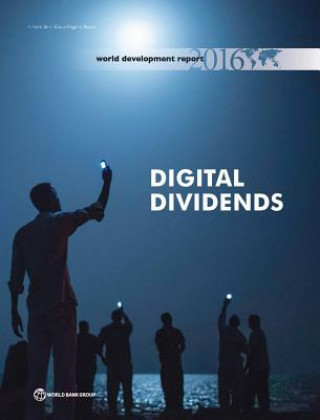
Książka World development report 2016 International Bank for Reconstruction and Development

World development report 2016

digital dividends

Język: Angielski
Oprawa: Miękka
Dostępność: Dostępna u dostawcy w małych ilościach
Wysyłamy za 11-15 dni
156.32
Digital technologies are spreading rapidly, but digital dividends--the broader benefits of faster gr...


Informacje o książce

Język
Angielski
Oprawa
Książka - Miękka
Data wydania
2015
strony
353
EAN
9781464806711
ISBN
1464806713
Enbook ID
11071078
Waga
880
Wymiary
303 x 207 x 24

Pełny opis

Digital technologies are spreading rapidly, but digital dividends--the broader benefits of faster growth, more jobs, and better services--are not. If more than 40 percent of adults in East Africa pay their utility bills using a mobile phone, why can’t others around the world do the same? If 8 million entrepreneurs in China--one third of them women--can use an e-commerce platform to export goods to 120 countries, why can’t entrepreneurs elsewhere achieve the same global reach? And if India can provide unique digital identification to 1 billion people in five years, and thereby reduce corruption by billions of dollars, why can’t other countries replicate its success? Indeed, what’s holding back countries from realizing the profound and transformational effects that digital technologies are supposed to deliver?Two main reasons. First, nearly 60 percent of the world’s population are still offline and can’t participate in the digital economy in any meaningful way. Second, and more important, the benefits of digital technologies can be offset by growing risks. Startups can disrupt incumbents, but not when vested interests and regulatory uncertainty obstruct competition and the entry of new firms. Employment opportunities may be greater, but not when the labor market is polarized. The internet can be a platform for universal empowerment, but not when it becomes a tool for state control and elite capture. The World Development Report 2016 shows that while the digital revolution has forged ahead, its 'analog complements'--the regulations that promote entry and competition, the skills that enable workers to access and then leverage the new economy, and the institutions that are accountable to citizens--have not kept pace. And when these analog complements to digital investments are absent, the development impact can be disappointing. What, then, should countries do? They should formulate digital development strategies that are much broader than current information and communication technology (ICT) strategies. They should create a policy and institutional environment for technology that fosters the greatest benefits. In short, they need to build a strong analog foundation to deliver digital dividends to everyone, everywhere.

Możesz być zainteresowany

Faith's Power Binds What Love's Glue Seals

Joya Georgia Fay Nelson-Kezas
42.38

Mr. Lonely Again

NINO PLAZOLA
136.39

Shadow Play

Barbara Ismail
38.20

It's You I Like!

Scarlett Wing
38.88
73.78
212.13
458.87
144.07
141.35
149.71
51.91

2009-2010

Li Yuming
733.62

Tundra-Taiga Biology

Robert M M Crawford
436.12

Klienci, którzy kupili tę książkę, kupili również

146.40
229.04
193.46

Trollsang

Kerstin Blodig
90.41