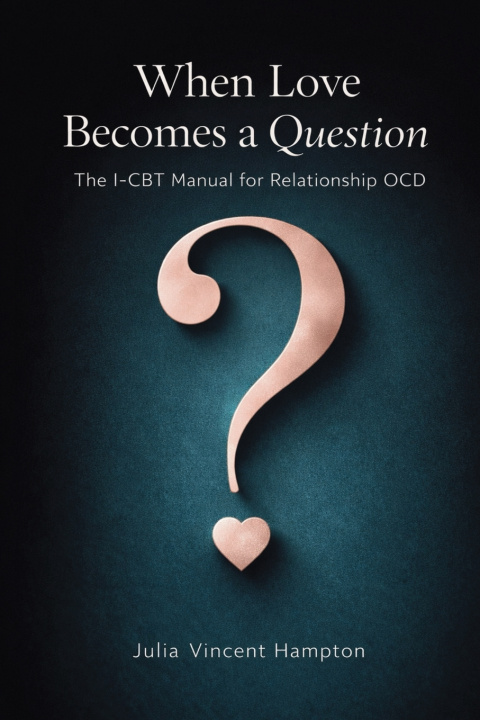
A Complete Clinical Protocol for the Most Misunderstood OCD Subtype
Relationship OCD (ROCD) affects millions of individuals who experience relentless, unwanted doubt about their romantic relationships and partners. These obsessive thoughts hijack the experience of love itself, trapping sufferers in cycles of checking, comparing, reassurance-seeking, and emotional monitoring that erode both wellbeing and relational bonds. Despite its prevalence, ROCD remains widely underdiagnosed and poorly understood by many mental health professionals.
Inference-Based Cognitive Behavioral Therapy Applied to Relationship Doubt
This comprehensive manual delivers the first complete I-CBT treatment protocol specifically designed for ROCD. Grounded in over two decades of research from the Montreal inference-based approach, the protocol addresses obsessional doubt at its source by targeting inferential confusion - the cognitive process through which imagination is mistaken for reality. Across twelve structured treatment modules organized into five clinical phases, clinicians gain session-by-session guidance for helping clients recognize the OCD narrative, identify the feared and authentic self, map the reality-imagination crossover, rebuild trust in direct experience, and consolidate lasting recovery.
Assessment, Conceptualization, and Clinical Tools in One Volume
The manual covers every stage of clinical work with ROCD. Detailed chapters address comprehensive ROCD assessment including differential diagnosis, case conceptualization using the inferential confusion model, treatment preparation, and all five protocol phases with module-by-module session plans and homework assignments. Extensive chapters on clinical techniques, special populations including LGBTQ+ relationships and neurodivergent clients, comorbidity management, partner and couples work, and pharmacotherapy integration round out the clinical content.
Practical Resources for Immediate Clinical Use
Twenty chapters are supplemented by five appendices containing a session-by-session quick reference guide, a glossary of I-CBT terminology, frequently asked questions for clients and clinicians, annotated recommended readings, and quick reference cards for in-session use. Reproducible client handouts, worksheets, and assessment instrument guides are included. Five extended case examples illustrate the full treatment arc from intake through follow-up, including relationship-centered ROCD, partner-focused ROCD, poor insight presentations, comorbid depression, and retroactive jealousy.
This manual serves mental health professionals seeking an evidence-based, structured approach to treating relationship obsessions and compulsions using the I-CBT framework, as well as informed readers committed to understanding ROCD recovery from a clinical perspective.