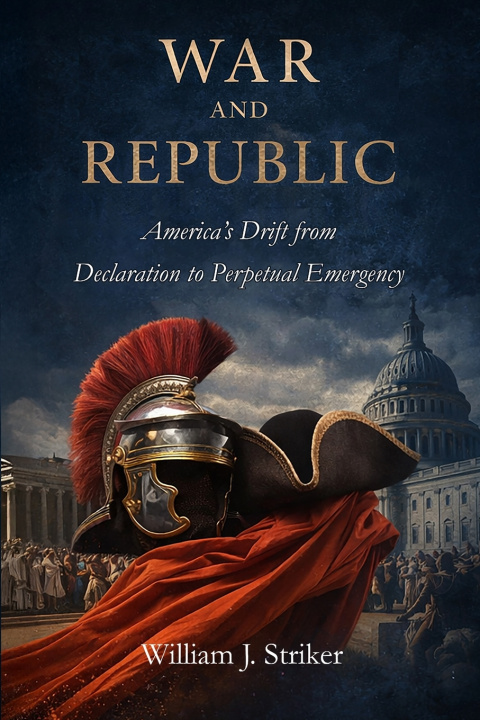
When a republic goes to war, who decides - and who pays the cost?
The American Constitution divided the powers of war in order to preserve liberty. Congress would decide when the nation entered war; the President would command the forces once war began. That design sought to ensure that military necessity would never replace constitutional rule.
Over time, however, the practice of American war powers changed.
War and Republic traces that transformation across the full arc of American history. Beginning with the classical political warnings of Greece and Rome and the constitutional design of the founding era, the book follows how the United States gradually moved from formal declarations of war to authorizations, covert operations, proxy conflicts, and long-running military commitments sustained without clear endings.
Rather than recounting battles, this study examines the constitutional structure through which wars are initiated, justified, financed, and sustained. It asks how authority is claimed, how consent is obtained, how visible military action remains to the public, how widely its burdens are shared, and how conflicts are ultimately brought to a close.
The result is a historical account of how a republic adapts the power of war - and what that evolution means for constitutional government in an age of recurring emergency.
This work was developed through a human-AI collaboration. Draft materials were generated with the assistance of AI tools, after which the author revised, structured, and refined all text to ensure coherence, intent, and literary voice.