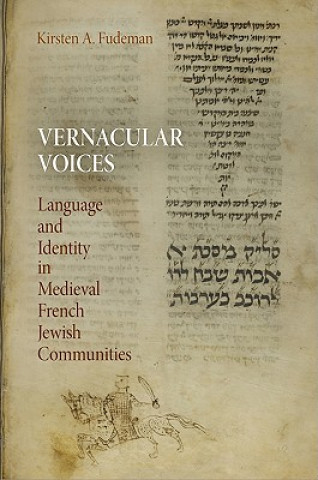
Książka Vernacular Voices Kirsten Fudeman

Vernacular Voices

Language and Identity in Medieval French Jewish Communities

Język: Angielski
Oprawa: Twarda
Dostępność: Dostępna u dostawcy
Wysyłamy za 14-21 dni
315.19
A thirteenth-century text purporting to represent a debate between a Jew and a Christian begins with...

Informacje o książce

Język
Angielski
Oprawa
Książka - Twarda
Data wydania
2010
strony
240
EAN
9780812242508
ISBN
0812242505
Enbook ID
04724253
Waga
584
Wymiary
158 x 234 x 27

Pełny opis

A thirteenth-century text purporting to represent a debate between a Jew and a Christian begins with the latter's exposition of the virgin birth, something the Jew finds incomprehensible at the most basic level, for reasons other than theological: "Speak to me in French and explain your words!" he says. "Gloss for me in French what you are saying in Latin!" While the Christian and the Jew of the debate both inhabit the so-called Latin Middle Ages, the Jew is no more comfortable with Latin than the Christian would be with Hebrew. Communication between the two is possible only through the vernacular. In Vernacular Voices, Kirsten Fudeman looks at the roles played by language, and especially medieval French and Hebrew, in shaping identity and culture. How did language affect the way Jews thought, how they interacted with one another and with Christians, and who they perceived themselves to be? What circumstances and forces led to the rise of a medieval Jewish tradition in French? Who were the writers, and why did they sometimes choose to write in the vernacular rather than Hebrew? How and in what terms did Jews define their relationship to the larger French-speaking community? Drawing on a variety of texts written in medieval French and Hebrew, including biblical glosses, medical and culinary recipes, incantations, prayers for the dead, wedding songs, and letters, Fudeman challenges readers to open their ears to the everyday voices of medieval French-speaking Jews and to consider French elements in Hebrew manuscripts not as a marginal phenomenon but as reflections of a vibrant and full vernacular existence. Applying analytical strategies from linguistics, literature, and history, she demonstrates that language played a central role in the formation, expression, and maintenance of medieval Jewish identity and that it brought Christians and Jews together even as it set them apart.

Możesz być zainteresowany

98.20

The Wild Hunt

LECOUTEUX CLAUDE
111.49

Before Being

MD PhD Don Howard
62.38
31.78

Notary Journal

Notes for Work
96.14

Will to Fight

Ben Connable
225.54
57.86

Politics Quaker Style

John H. Ferguson
143.37

Luminous Moments

Lyn McCredden
174.66

Big God

Orlando Saer
36.21

365 Great Bible Stories

Carine Mackenzie
118.47

Klienci, którzy kupili tę książkę, kupili również

Feuer

Gabriele d'Annunzio
67.10
127.63

Confessioni

Marco Marchetti
154.89