INTRODUCTION
Understanding Vampire Bats and Their Place in Nature
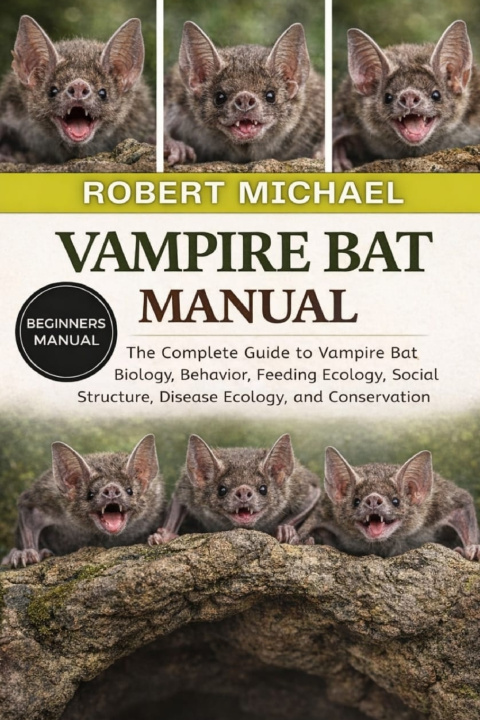
Vampire bats are among the most fascinating and misunderstood mammals in the natural world. Their name alone often stirs fear, shaped by centuries of folklore, horror stories, and dramatic portrayals. Yet behind this reputation lies a group of highly specialized animals whose lives are guided not by myth, but by remarkable biological precision and social complexity. To understand vampire bats is to step into a world where survival depends on cooperation, adaptation, and an intricate balance with the environment.
Vampire bats belong to a small group of bats found only in the Americas, and unlike the majority of bat species that feed on insects, fruits, or nectar, they have evolved to survive entirely on blood. This unique feeding strategy, known as hematophagy, sets them apart from nearly all other mammals. Rather than seeing this as something unnatural or frightening, it is better understood as a highly refined evolutionary pathway. Over millions of years, vampire bats developed specialized tools-sharp incisors, anticoagulant saliva, and heat-sensing abilities-that allow them to feed efficiently without seriously harming their hosts. Their feeding method is precise, careful, and surprisingly gentle, often going unnoticed by the animals they feed on.
Understanding vampire bats begins with recognizing that they are not aggressive predators. They do not hunt in the traditional sense, nor do they seek out conflict. Instead, they rely on stealth, patience, and sensory awareness. A vampire bat will typically approach a resting animal, such as livestock or wildlife, and make a small incision in the skin. The bat then laps up the blood that flows from the wound, aided by saliva that prevents clotting. This feeding process is quick, quiet, and designed to minimize disturbance. From the bat's perspective, this is not an act of violence but a necessary behavior for survival.
Their place in nature is deeply connected to their environment. Vampire bats are found in tropical and subtropical regions, where warm temperatures and abundant wildlife create ideal conditions for their lifestyle. They roost in dark, sheltered spaces such as caves, hollow trees, abandoned buildings, and crevices in rock formations. These roosts serve as safe havens during the day, where they rest and interact with their colony members. At night, they emerge to feed, navigating through the darkness with extraordinary precision.
One of the most remarkable aspects of vampire bats is their social structure. Unlike many animals that live independently, vampire bats are highly social and depend on one another for survival. Within a colony, individuals form strong bonds that go beyond simple coexistence. They groom one another, share food, and maintain long-term relationships that can last for years. Food sharing is especially important, as a bat that fails to feed for even a few days can face starvation. In these situations, other bats may regurgitate blood to help a hungry individual survive. This behavior is not random; it is based on trust and past interactions, demonstrating a level of social intelligence that challenges common assumptions about animal behavior.