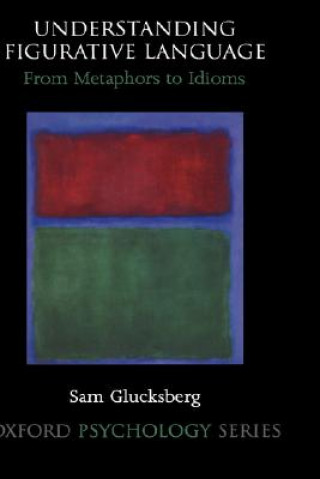
Książka Understanding Figurative Language Sam Glucksberg

Understanding Figurative Language

From Metaphor to Idioms

Język: Angielski
Oprawa: Twarda
Dostępność: Dostępna w małych ilościach
Wysyłamy do 24 godzin
26.86
This book examines how people understand utterances that are intended figuratively. Traditionally, f...
Informacje o książce

Język
Angielski
Oprawa
Książka - Twarda
Data wydania
2001
strony
144
EAN
9780195111095
ISBN
0195111095
Enbook ID
04514063
Waga
367
Wymiary
163 x 243 x 15

Pełny opis

This book examines how people understand utterances that are intended figuratively. Traditionally, figurative language such as metaphors and idioms has been considered derivative from more complex than ostensibly straightforward literal language. Glucksberg argues that figurative language involves the same kinds of linguistic and pragmatic operations that are used for ordinary, literal language. Glucksberg's research in this book is concerned with ordinary language: expressions that are used in daily life, including conversations about everyday matters, newspaper and magazine articles, and the media. Metaphor is the major focus of the book. Idioms, however, are also treated comprehensively, as is the theory of conceptual metaphor in the context of how people understand both conventional and novel figurative expressions. A new theory of metaphor comprehension is put forward, and evaluated with respect to competing theories in linguistics and in psychology. The central tenet of the theory is that ordinary conversational metaphors are used to create new concepts and categories. This process is spontaneous and automatic. Metaphor is special only in the sense that these catagories get their names from the best examples of the things they represent, and that these categories get their names from the best examples of those categories. Thus, the literal "shark" can be a metaphor for any vicious and predatory being, from unscrupulous salespeople to a murderous character in The Threepenny Opera. Because the same term, e.g.,"shark," is used both for its literal referent and for the metaphorical category, as in "My lawyer is a shark," we call it the dual-reference theory. The theory is then extended to two other domains: idioms and conceptual metaphors. The book presents the first comprehensive account of how people use and understand metaphors in everyday life.

Możesz być zainteresowany

164.81
394.29

Idioms

Louis Malaher
184.58

Idioms

Abbas Ali Zarei
205.41

Distant Ruptures

Sammy Harkham
103.97
247.28

Great Northwest

Henry Jacob Winser
99.20
26.86
42.44
455.62
10.31

Lost Days

Michael Jan Friedman
64.73
95.01

Saudi Aramco 2030

Mohamed A. Ramady
317.96

American Warsaw

Dominic A. Pacyga
131.91
85.66

Klienci, którzy kupili tę książkę, kupili również

Haccp

Alexander Nagel
219.92

Le pouvoir de l'absent

Gijs Anne-Sophie Gijs
357.39
86.64

Lidé milénia

J G Ballard
22.09
129.67