What if the most important philosopher of individual self-overcoming was also, in a significant sense, a philosopher of anarchism?
The question sounds provocative-even perverse. Friedrich Nietzsche has long been associated with the political right: the irrationalist herald of fascism, the elitist scorner of democratic masses, the thinker whose legacy was poisoned by his sister's collaboration with the Nazi regime. Yet the historical record tells a different story. Emma Goldman quoted him in her lectures and wove his categories through her entire political vision. Russian radicals engaged his work with desperate intensity as they tried to understand what the Bolshevik revolution was betraying. Murray Bookchin's social ecology vibrates at Nietzschean frequencies he himself rarely acknowledged. David Graeber's anthropology of debt and refusal circles the same territory that Nietzsche mapped in the Genealogy of Morals. And the Black Bloc that made global headlines in Seattle in 1999 enacted something recognizable as a Dionysian political moment-a collective dissolution of the boundaries of legitimate protest in the name of active, creative refusal.
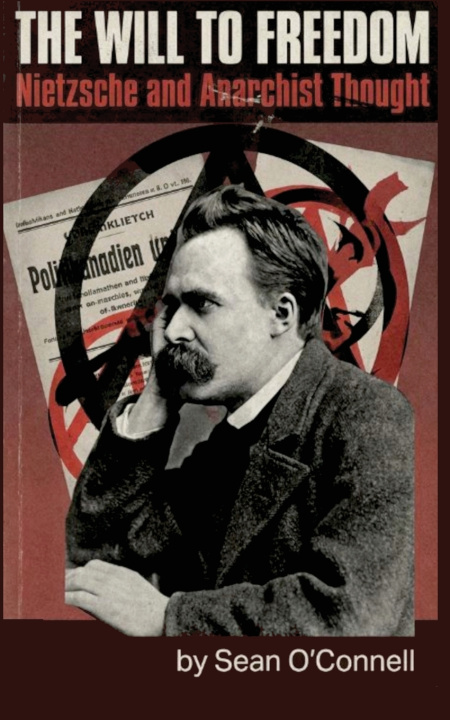
THE WILL TO FREEDOM traces this unexpected alliance across more than a century of radical thought. Drawing on Seth Taylor's landmark recovery of the left-wing Nietzsche vogue in German Expressionism, and extending that analysis to the Anglo-American and Russian anarchist traditions, Sean O'Connell argues that the encounter between Nietzsche and anarchism was not a misreading or an embarrassment but a genuine philosophical encounter between two bodies of thought that had more in common than either has wanted to acknowledge.
Both Nietzsche and the anarchist tradition offer sustained critiques of state power as inherently corrupting. Both develop analyses of how domination operates at the psychological level-through the internalization of values that serve the powerful. Both insist on the importance of active, creative force over reactive resentment. And both refuse to reduce the question of liberation to the seizure of political or economic power, insisting instead on the transformation of the human beings who are to inhabit whatever comes after.
The incompatibilities are real and honestly confronted here: Nietzsche's elitism, his contempt for democratic politics, his hierarchical ordering of human types all sit uneasily with anarchism's commitment to mutual aid and collective liberation. What the anarchist tradition did with Nietzsche-what Goldman and Bookchin and Graeber did, knowingly or not-was to democratize his most powerful insights: to insist that the capacity for creative self-overcoming belongs not to the exceptional few but to everyone, and that the task of radical politics is to dismantle the structures that suppress it.
A work of intellectual history and political philosophy in the tradition of Daniel Guérin, Howard Zinn, and Matthew Adams, THE WILL TO FREEDOM is essential reading for anyone interested in the philosophical roots of anarchism, the political legacy of Nietzsche, and the ongoing question of what genuine human liberation might actually require.