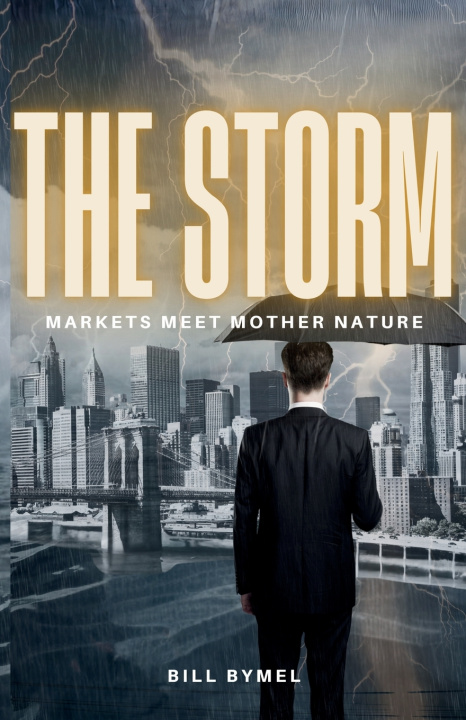
For decades, the global economy relied on a quiet set of assumptions: stable climate conditions, cheap capital, predictable demographics, and incremental change.
Those assumptions no longer hold.
Today, climate risk, rising interest rates, aging infrastructure, and shifting demographics are colliding inside commercial real estate and the banking system. Insurance markets are retreating. Commercial loans are resetting at valuations that no longer work. Financial institutions are managing systemic risk with frameworks built for a calmer era.
These pressures are not isolated. They are compounding.
The Storm examines how climate change, commercial real estate exposure, distressed debt, and financial market cycles are converging into a single structural event - one hiding in plain sight.
Drawing on decades in mortgage portfolios, asset management, and loss mitigation, Bill Bymel analyzes how banks, insurers, and investors can adapt before instability becomes crisis.
This book is not meant for panic, but rather for preparation.
Inside, you'll explore:
- The dismantling of post-2008 banking safeguards
- The impact of climate volatility on insurance and real estate markets
- The risks embedded in commercial loan portfolios
- Why traditional financial models no longer reflect today's systemic risk
- Practical strategies for resilient asset management and proactive loss mitigation
Storms expose weak structures and reward discipline.
The Storm is already here.
Whether it becomes a financial catastrophe or a catalyst for resilience depends on what leaders choose to acknowledge and how they respond.