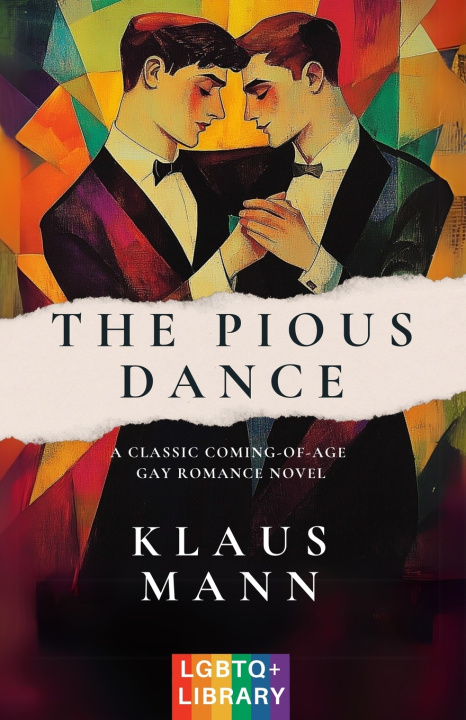
A Groundbreaking Literary Classic of LGBTQ Literature by Klaus Mann, First Published in Germany in 1926. Set in the Gay Underground of Berlin and Paris's Nightclub Scenes, the Novel Features the First Unapologetic Transgender Character in 20th-Century Literature.
The Pious Dance (Der fromme Tanz), Klaus Mann's first novel, published when he was just twenty years old, stands as a groundbreaking work of early modernist German literature and a significant milestone in LGBT+ literary history. Written with the raw authenticity of youth, this semi-autobiographical work captures the spirited and tumultuous atmosphere of Weimar-era Berlin through the eyes of its protagonist, Andreas Magnus, a thinly veiled version of Mann himself.
This new edition features:
- A New English Translation from the Original German Text
- An Introduction by the Editor
- Endnotes to each Act of the Novel
- Chapter By Chapter Critical Analysis
- Author Biography
- Three Scholarly Essays
The three scholarly essays:
- Klaus Mann's "The Pious Dance": A Work Beyond Definition
- Beyond Binary: Early Trans Representation in Klaus Mann's Der fromme Tanz and the Evolution of LGBTQ+ Literature
- Dancing Toward Tomorrow: Queer Utopian Longing in Klaus Mann's "The Pious Dance"
The novel's autobiographical elements are unmistakable, as Mann draws heavily from his own experiences as a young gay artist navigating Berlin's vibrant and permissive cultural scene of the 1920s. Through Andreas, Mann explores his own struggles with artistic identity, sexual awakening, and the search for meaningful connection in a world of fleeting encounters. The protagonist's journey through Berlin's cabarets, artistic circles, and underground gay venues mirrors Mann's own explorations of the city's liberal atmosphere during the Weimar Republic.