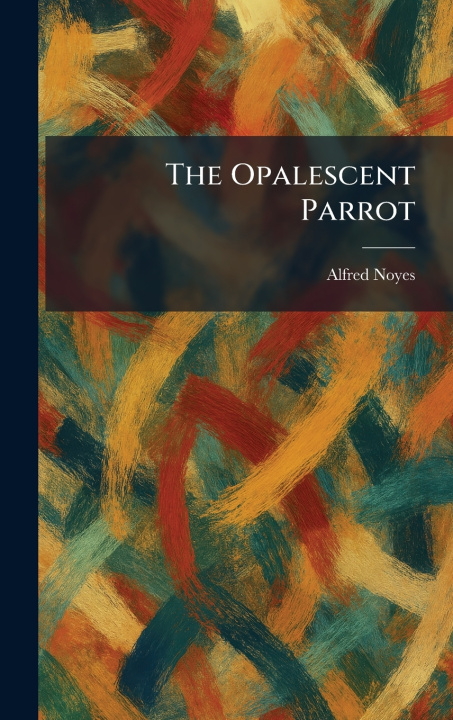
"The Opalescent Parrot" is a sophisticated collection of literary essays and critical reflections by the distinguished English poet and man of letters, Alfred Noyes. In this work, Noyes ventures into the realm of literary polemics and appreciation, offering a series of spirited re-examinations of major figures in the Western canon. The volume showcases Noyes's deep erudition and his commitment to the traditional values of melody, clarity, and spiritual depth in literature.
Through a diverse range of topics, the author discusses and defends the reputations of writers such as William Shakespeare, John Bunyan, Percy Bysshe Shelley, and Francis Thompson. Noyes uses his characteristic prose style-at once elegant and forceful-to challenge the modern critical trends of his era that sought to diminish the achievements of the past. By revisiting these classic authors, he seeks to uncover the enduring "opalescent" qualities of great art that remain vibrant regardless of changing fashions. This collection is an essential read for those interested in the history of literary taste and the passionate defense of the Romantic and Victorian traditions during the early 20th century. It stands as a significant testament to the intellectual landscape of the period and the enduring relevance of poetic legacy.
This work has been selected by scholars as being culturally important, and is part of the knowledge base of civilization as we know it. This work was reproduced from the original artifact, and remains as true to the original work as possible. Therefore, you may see the original copyright references, library stamps (as most of these works have been housed in our most important libraries around the world), and other notations in the work.
This work is in the public domain in the United States of America, and possibly other nations. Within the United States, you may freely copy and distribute this work, as no entity (individual or corporate) has a copyright on the body of the work.
As a reproduction of a historical artifact, this work may contain missing or blurred pages, poor pictures, errant marks, etc. Scholars believe, and we concur, that this work is important enough to be preserved, reproduced, and made generally available to the public. We appreciate your support of the preservation process, and thank you for being an important part of keeping this knowledge alive and relevant.