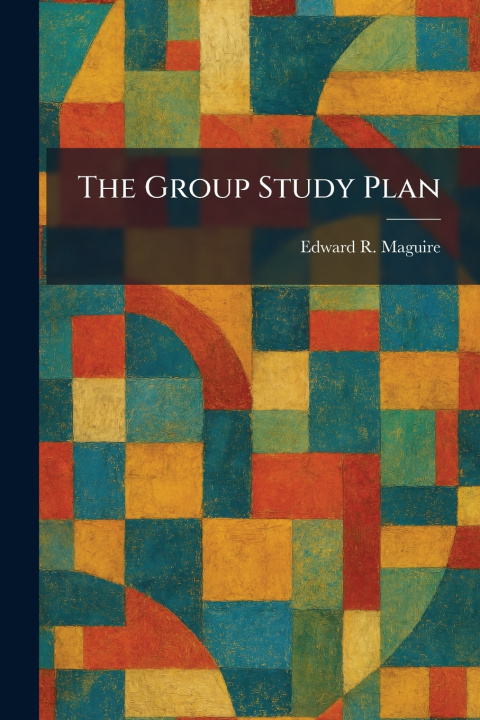
"The Group Study Plan" by Edward R. Maguire is a seminal contribution to the field of educational theory and classroom practice. This work explores the implementation of differentiated instruction and student-centered learning within the junior high school environment, providing a foundational look at the evolution of modern teaching techniques.
Maguire presents a structured approach to group-based instruction, aiming to move beyond traditional rote memorization toward a more dynamic, collaborative classroom experience. The text provides a detailed roadmap for teachers to manage diverse student needs through organized study groups, fostering independence and critical thinking. By emphasizing the teacher's role as a facilitator rather than a lecturer, the book outlines techniques for lesson planning, supervised study, and the assessment of individual progress within a social learning context.
This volume remains an important historical document for educators, administrators, and historians interested in the roots of progressive education and the development of instructional strategies that prioritize student engagement and cooperative achievement. It offers timeless insights into the challenges and triumphs of managing individual differences in a group setting.
This work has been selected by scholars as being culturally important, and is part of the knowledge base of civilization as we know it. This work was reproduced from the original artifact, and remains as true to the original work as possible. Therefore, you may see the original copyright references, library stamps (as most of these works have been housed in our most important libraries around the world), and other notations in the work.
This work is in the public domain in the United States of America, and possibly other nations. Within the United States, you may freely copy and distribute this work, as no entity (individual or corporate) has a copyright on the body of the work.
As a reproduction of a historical artifact, this work may contain missing or blurred pages, poor pictures, errant marks, etc. Scholars believe, and we concur, that this work is important enough to be preserved, reproduced, and made generally available to the public. We appreciate your support of the preservation process, and thank you for being an important part of keeping this knowledge alive and relevant.