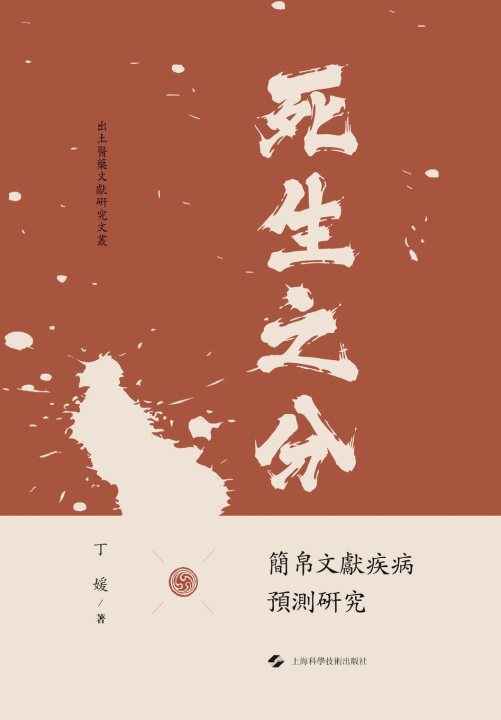
Through in-depth collation and study of bamboo and silk manuscripts-especially those related to medicine-this book reveals the level of medical practice in early China. It is particularly distinctive in its focus on disease prognosis and time-space medicine, offering a valuable supplement to the historical sources on medicine in ancient China.
本书通过对简帛文献进行深入整理研究,尤其对简帛文献涉医相关文献进行整理,从而揭示中国早期的医疗水平,尤其在疾病预测与时空医学方面,犹具特色。本书对古代中国的医史资料是一个有力的补充。
Since the early 20th century, the excavation of a large number of bamboo and silk medical manuscripts and medically-related bamboo-silk texts has significantly compensated for the scarcity of transmitted medical literature from the Warring States, Qin, and Han periods. This book provides a comprehensive and systematic collation of content related to disease prognosis found in excavated bamboo and silk texts, while also conducting comparative studies with transmitted literature and Dunhuang manuscripts.
Disease prognosis in these texts includes predicting the onset, spread, and outcome of diseases, as well as divining the sources of pathogenic afflictions and the sites of disease manifestation. Based on the methods and principles underlying these predictions, the book explores the subject from eight perspectives: clinical signs and symptoms, color inspection and pulse diagnosis, therapeutic experience, seasonal climate, cyclical干支 (ganzhi) correspondences, cosmic modeling, turtle-shell and milfoil divination, and the auspiciousness or inauspiciousness of time.
The disease prognosis found in bamboo and silk texts exhibits significant complexity and diversity. On the one hand, it reflects clinical experience accumulated over long-term medical practice. On the other hand, it retains certain primitive worldviews. Moreover, it is grounded in concepts such as yin-yang and five phases, the correspondence between heaven and humanity, and numeral-symbol inference, constructing systematic methodological frameworks for disease prognosis and outcome analysis. The coexistence of such a多元 predictive system reflects the multidimensional exploration of early Chinese medicine-between empirical accumulation and theoretical construction-during the Warring States, Qin, and Han periods.
This book serves as a reference for researchers, teachers, and students in fields such as Chinese medicine, history, and archaeology, and is also suitable for general readers interested in these areas.
20世纪初以来,大量简帛医书和涉医简帛的出土,很大程度上弥补了战国秦汉时期传世医学文献不足的缺憾。本书全面系统地梳理了出土简帛中涉及疾病预测的内容,同时结合传世文献和敦煌文献进行对比研究。疾病预测包括预测疾病的发生、流行、转归,以及占测作祟病源和发病部位等。根据预测方法和原理,本书从临床证候、色诊脉诊、治疗经验、时令气候、病日干支、宇宙图式、龟卜筮占、时日吉凶等八个方面展开论述。简帛文献中的疾病预测呈现出显著的复杂性差异,既有基于长期医疗实践总结出的临床经验,又保留了一些原始自然观,还以阴阳五行、天人相应、象数推演等为基础,构建疾病预测与转归分析的系统化方法论框架。这种多元预测体系的并存,反映了战国秦汉时期的医学在经验积累与理论建构过程中的多维探索。本书可供中医学、历史学、考古学等领域的科研人员、教师、学生参考使用,也适合对这些领域感兴趣的一般读者阅读参考。