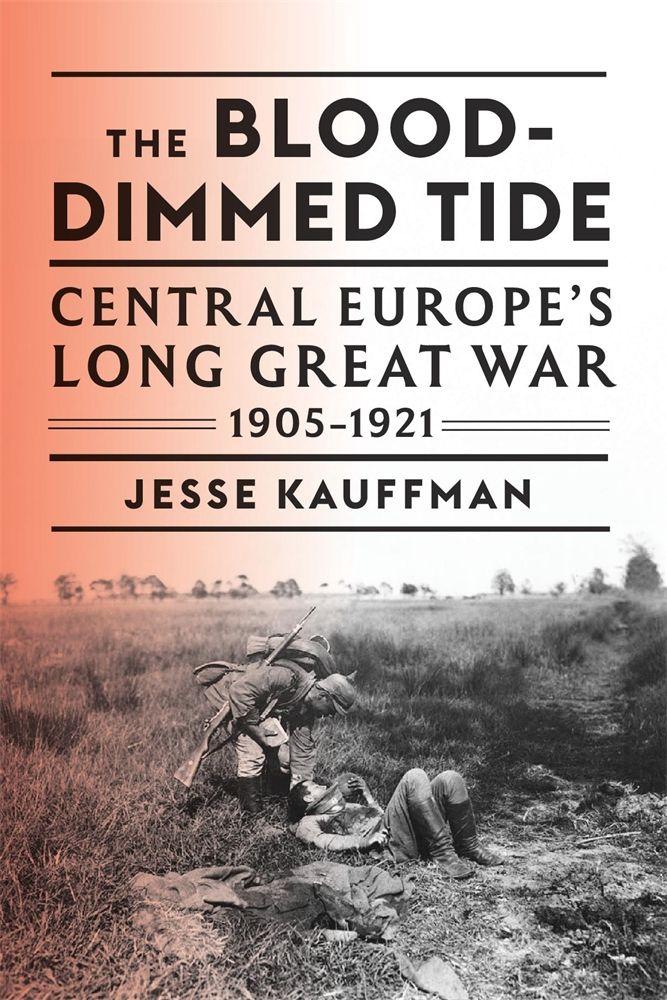
Książka The Blood-Dimmed Tide Jesse Kauffman

The Blood-Dimmed Tide

Język: Angielski
Oprawa: Twarda
Dostępność: Oczekiwana premiera
Termin nieznany
138.52
An expansive narrative of World War I’s Eastern Front challenges longstanding analytical frameworks,...

Informacje o książce

Język
Angielski
Oprawa
Książka - Twarda
Data wydania
2026
strony
272
EAN
9780674972353
ISBN
067497235X
Enbook ID
49772721
Waga
666

Pełny opis

An expansive narrative of World War I’s Eastern Front challenges longstanding analytical frameworks, offering a novel and far-reaching explanation for the emergence of new nation-states from the wreckage of Europe’s land empires. In August 1914, Germany, Austria, and Russia sent millions of soldiers hurtling toward one another across the volatile borderlands of Central Europe. The early battles produced appalling casualties but no decisive triumphs; the Great War’s Eastern Front would remain a cauldron of death and destruction for years. And unlike in western Europe, the killing would not end in 1918. With the collapse of the three empires, the front dissolved into a series of overlapping civil, international, and revolutionary wars that would continue for several years more. The connections among prewar, wartime, and postwar events in Central Europe are so strong, argues Jesse Kauffman, that we should analyze the conflict there in new chronological terms: starting with the Russian Revolution in 1905 and continuing until at least the 1921 Treaty of Riga. In particular, The Blood-Dimmed Tide shows that the emergence of sovereign nation-states in postwar Central Europe was neither the inevitable triumph of long-thwarted national ambitions nor a wholly contingent, unforeseeable outcome of the war. Rather, modern states emerged from a conscious decision taken by all the belligerents to encourage the nationalist aspirations of imperial subjects in their enemies’ territories. Indeed, the repercussions of Central Europe’s long Great War can be felt all the way to today’s conflict in Ukraine. It might be time to retire Eric Hobsbawm’s famous notion of the “short twentieth century”—1914 to 1991—and to consider instead that the twentieth century has not yet drawn to a close.

Możesz być zainteresowany

Washington Allston

Kerry Dean Carso
353.80

Uncommon Reader

Alan Bennett
38.02
106.78

Smile

LEAF DAVID
72.85

Meditations

Marcus Aurelius
67.46

The Names

Florence Knapp
49.99

Blasfamous

Andolfo
98.80
85.32

Rouge

My Brother's Editor
71.95

Attention Span

Gloria Mark
54.88

Dandadan, Vol. 1

Yukinobu Tatsu
41.81
81.53

SMPLE-KOIN

Samuel Alexander
33.92

Jerusalem

Simon Sebag Montefiore
96.50

Modern Station

Brian Edwards
1 010.41

All The Sad Young Men

Francis Scott Fitzgerald
36.72

Dynamical Systems VII

Vladimir I. Arnold
434.14

Matrix of Yoga

Georg Feuerstein
62.57

Klienci, którzy kupili tę książkę, kupili również

Naturlich waschen!

James Hamblin
92.71

Poemes saturniens

Paul Verlaine
23.84

Reavívanos

Mark Finley
9.27

Der Gabelstaplerfahrer

Bernd Zimmermann
49.79