Książka Technology CAD - Computer Simulation of IC Processes and Devices Robert

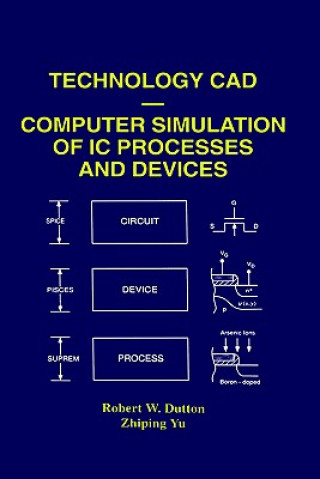
Technology CAD - Computer Simulation of IC Processes and Devices

Autor: Robert, W. Dutton
Język: Angielski
Oprawa: Twarda
Wydawca: Springer
Dostępność: Dostępna u dostawcy
Wysyłamy za 10-13 dni
951.55
The rapid evolution and explosive growth of integrated circuit technology have impacted society more...


Informacje o książce

Autor
Język
Angielski
Oprawa
Książka - Twarda
Data wydania
1993
strony
373
EAN
9780792393795
ISBN
0792393791
Enbook ID
04162491
Wydawca
Waga
1610
Wymiary
155 x 235 x 26

Pełny opis

The rapid evolution and explosive growth of integrated circuit technology have impacted society more than any other technological development of the 20th century. Integrated circuits (ICs) are used universally and the expanding use of IC technology requires more accurate circuit analysis methods and tools, prompting the introduction of computers into the design process. The goal of this book is to build a firm foundation in the use of computer-assisted techniques for IC device and process design. Both practical and analytical viewpoints are stressed to give the reader the background necessary to appreciate CAD tools and to feel comfortable with their use. Technology CAD - Computer Simulation of IC Processes and Devices presents a unified discourse on process and device CAD as interrelated subjects, building on a wide range of experiences and applications of the SUPREM program. Chapter 1 focuses on the motivation for coupled process and device CAD. In Chapter 2 SUPREM III is introduced, and process CAD is discussed in terms of ion-implantation, impurity diffusion, and oxidation models. Chapter 3 introduces the Stanford device analysis program SEDAN III (SEmiconductor Device ANalysis). The next three chapters move into greater detail concerning device operating principles and analysis techniques. Chapter 4 reviews the classical formulation of pn junction theory and uses device analysis (SEDAN) both to evaluate some of the classical assumptions and to investigate the difficult problem of high level injection. Chapter 5 returns to MOS devices, reviews the first-order MOS theory, and introduces some important second-order effects. Chapter 6 considers the bipolar transistor. Chapter 7 considers the application of process simulation and device analysis to technology design. The BiCMOS process is selected as a useful design vehicle for two reasons. First, it allows the reader to pull together concepts from the entire book. Second, the inherent nature of BiCMOS technology offers real constraints and hence trade-offs which must be understood and accounted for.

Możesz być zainteresowany

433.29
133.56
67.92

Stolen

JASON PINTER
66.23
69.72

Washington D.C.'s Deanwood

The Deanwood History Committee
103.48

Microeconomics for MBAs

Richard B. McKenzie
557.90

DNA Evidence

Janne Holmgren
345.43
606.80
256.48

Tantric Quest

Daniel Odier
57.06
58.36

Klienci, którzy kupili tę książkę, kupili również

Léna

Dobray Sarolta
61.35
46.11
128.28

Von der Idee zum Text

Helga Esselborn-Krumbiegel
60.45
106.37

Poetines

valls dominique
31.07
91.13