Książka System Identification Karel J Keesman

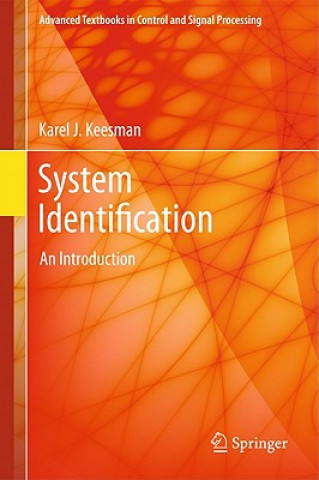
System Identification

Język: Angielski
Oprawa: Miękka
Dostępność: Dostępna u dostawcy
Wysyłamy za 8-11 dni
318.96
System Identification: an Introduction shows the (student) reader how to approach the system identif...


Informacje o książce

Język
Angielski
Oprawa
Książka - Miękka
Data wydania
2011
strony
323
EAN
9780857295217
ISBN
0857295217
Enbook ID
01210326
Waga
528
Wymiary
236 x 157 x 14

Pełny opis

System Identification: an Introduction shows the (student) reader how to approach the system identification problem in a systematic fashion. Essentially, system identification is an art of modelling, where appropriate choices have to be made concerning the level of approximation, given prior system s knowledge, noisy data and the final modelling objective. The system identification process is basically divided into three basic steps: experimental design and data collection; model structure selection and parameter estimation; and model validation, each of which is the subject of one or more parts of the text. §Following an introduction on system theory, particularly in relation to model representation and model properties, the book contains four parts covering:§· data-based identification non-parametric methods for use when prior system knowledge is very limited;§· time-invariant identification for systems with constant parameters;§· time-varying systems identification, primarily with recursive estimation techniques; and§· model validation methods.§A fifth part, composed of appendices, covers the various aspects of the underlying mathematics needed to begin using the text.§The book uses essentially semi-physical or grey-box modelling methods although data-based, transfer-function system descriptions are also introduced. The approach is problem-based rather than rigorously mathematical. The use of finite input output data is demonstrated for frequency- and time-domain identification in static, dynamic, linear, nonlinear, time-invariant and time-varying systems. Simple examples are used to show readers how to perform and emulate the identification steps involved in various model applications, as control, prediction and experimental design, with more complex illustrations derived from real physical, chemical and biological applications being used to demonstrate the practical applicability of the methods described. End-of-chapter exercises (for which a downloadable instructors Solutions Manual is available from www.springer.com/978-0-85729-521-7 will both help students to assimilate what they have learnt and make the book suitable for self-tuition by practitioners looking to brush up on modern techniques.§Graduate and final-year undergraduate students will find this text to be a practical and realistic course in system identification that can be used for assessing the processes of a variety of engineering disciplines. System Identification: an Introduction will help academic instructors teaching control-related courses to give their students a good understanding of identification methods that can be used in the real world without the encumbrance of undue mathematical detail.§

Możesz być zainteresowany

374.05
291.13

Group Theory

Dinesh Khattar
415.65
306.17
208.50
329.51
332.54
48.73
353.34
82.81
79.59

Linear Algebra

Serge Lang
204.01

Hunting Adeline

H. D. Carlton
58.79

The Divorce

Alice Menzies
134.67
50.58

No Guns Life, Vol. 10

Tasuku Karasuma
43.94

Klienci, którzy kupili tę książkę, kupili również

780.43

Control System Design

Bernard Friedland
128.52
434.89

Modern Cryptography

William Easttom
229.11
220.42
385.77

Joy of Abstraction

Eugenia Cheng
87.30
678.96
756.89

Algorithm Design Manual

Steven S. Skiena
388.31
636.57
458.04
862.47
674.56
709.82
291.13