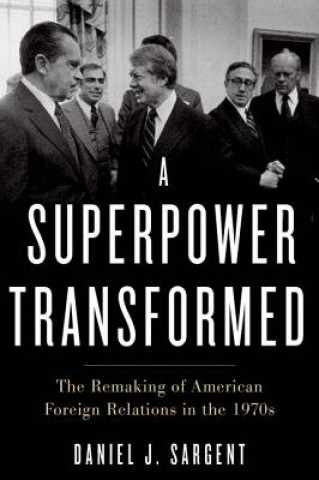
Książka Superpower Transformed Daniel J. Sargent

Superpower Transformed

Język: Angielski
Oprawa: Twarda
Wydawca: OUP USA
Dostępność: Dostępna u dostawcy
Wysyłamy za 9-15 dni
174.42
A Superpower Transformed explores the predicament of American foreign policy in the 1970s. This was...


Informacje o książce

Język
Angielski
Oprawa
Książka - Twarda
Data wydania
2014
strony
456
EAN
9780195395471
ISBN
0195395476
Enbook ID
04519332
Wydawca
Waga
718
Wymiary
164 x 239 x 36

Pełny opis

A Superpower Transformed explores the predicament of American foreign policy in the 1970s. This was a phase when the dilemmas of an emerging post-Cold War era buffeted the United States even as the makers of American foreign policy struggled for stability in an enduring Cold War. Clashing imperatives made the 1970s a difficult phase. Amidst conflicting pressures, leaders struggled to devise strategic frameworks to guide the exercise of American power in the world. 1970s-era choices nonetheless proved consequential. The Nixon administration's efforts to stabilize a faltering Pax Americana faltered, but Nixon's choices ultimately helped the champions of human rights to wrest control of American foreign policy away from the practitioners of amoral realpolitik. So too did Nixon's efforts to reverse the decline of American economic power help to open the doors to financial globalization, which accelerated quickly in the years following the 1971-73 collapse of the Bretton Woods international monetary system. Choices proved consequential, but American decision makers remained the captives of unmasterable circumstances, as the oil crisis of 1973-74 made clear. Coinciding with Watergate, the oil crisis plunged the world economy into disarray. It also pushed American decision makers to begin to devise new strategies to manage-or mitigate-the consequences of economic globalization. Henry Kissinger, who led this effort, was less successful in his attempts to terms with a human rights movement that flourished in the mid-1970s. Not until the inauguration of the Carter administration would American decision makers embrace human rights promotion as a central task for foreign policy. Carter's efforts to devise a post-Cold War foreign policy nonetheless faltered, confounded in the last years of 1970s by the resurgence of Soviet-American hostilities. While the Cold War resurged, the new forces of globalization and human rights that mobilized in the 1970s left the United States a superpower transformed.

Możesz być zainteresowany

Wanting Mr. Cane

Shanora Williams
61.23

Bunnypedia

OLIVIA BENNETT
72.26
40.23

Sunstruck

William Rayfet Hunter
71.77

Piano Club

Heather Milnes
53.71
149.71
66.11

Apocryphal Gospels

Simon Gathercole
57.61
31.54

First Cousin, Once Removed

Ann McReynolds Bush
38.67
34.76

Cross Game 4

Mitsuru Adachi
57.42
55.76

Birds of Nepal

GRIMMETT RICHARD
192.78

Klienci, którzy kupili tę książkę, kupili również

Xianiño e Xianón

SAGARZAZU BADIOLA
18.94

Neuseeland

Oliver Bolch
341.82
52.63
74.80