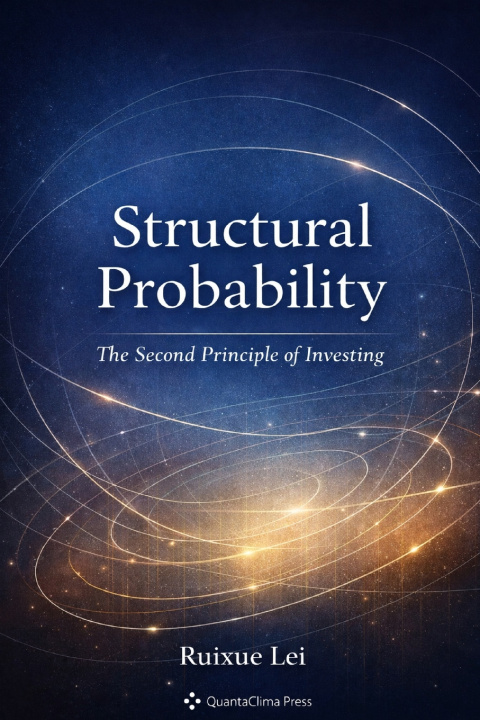
What if profit does not come from prediction-but from structure?
Most investment theories are built on forecasting, valuation, and narrative interpretation. Yet real markets behave as constraint-driven complex systems where prices emerge from interaction, probability, and time rather than certainty.
Structural Probability proposes a new foundation for investing. Instead of asking whether prices will rise, it asks a deeper question:
Under what structural conditions are buyers more likely to appear?
Bridging complex systems science, quantitative thinking, and financial markets, this book develops a unified framework explaining: • How prices are structurally formed rather than predicted • Why alpha emerges, decays, and compounds through time • How institutional constraints create persistent probabilistic edges • Why long-term returns are the outcome of survival and compounding, not correctness
This is not a trading manual or a promise of quick profit. It is a theoretical map for navigating uncertainty-intended for serious investors, researchers, and thinkers seeking a deeper logic beneath market behavior.
A foundational work on probability, structure, and time in investing.