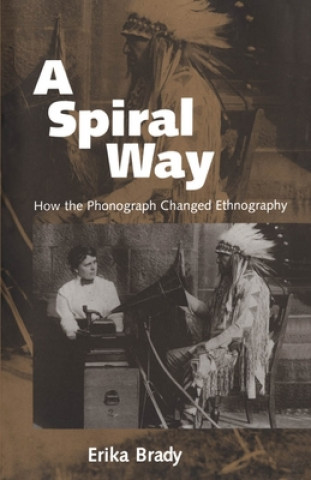
Książka Spiral Way Erika Brady

Spiral Way

How the Phonograph Changed Ethnography

Autor: Erika Brady
Język: Angielski
Oprawa: Miękka
Dostępność: Dostępna u dostawcy
Wysyłamy za 10-18 dni
146.87
The way Edison's talking machine brought the study of ethnic cultures into the modern era The inv...
Informacje o książce

Autor
Język
Angielski
Oprawa
Książka - Miękka
Data wydania
2010
strony
277
EAN
9781578061747
ISBN
9781578061747
Enbook ID
08743211
Waga
240
Wymiary
152 x 229 x 13

Pełny opis

The way Edison's talking machine brought the study of ethnic cultures into the modern era The invention of the cylinder phonograph at the end of the nineteenth century opened up a new world for cultural research. Indeed, Edison's talking machine became one of the basic tools of anthropology. It not only equipped researchers with the means of preserving folk songs but it also enabled them to investigate a wide spectrum of distinct vocal expressions in the emerging fields of anthropology and folklore. Ethnographers grasped its huge potential and fanned out through regional America to record rituals, stories, word lists, and songs in isolated cultures. From the outset the federal government helped fuel the momentum to record cultures that were at risk of being lost. Through the Bureau of American Ethnology, the Smithsonian Institution took an active role in preserving native heritage. It supported projects to make phonographic documentation of American Indian language, music, and rituals before developing technologies and national expansion might futher undermine them. This study of the early phonograph's impact shows traditional ethnography being transformed, for attitudes of both ethnographers and performers were reshaped by this exciting technology. In the presence of the phonograph both fieldwork and the materials collected were revolutionized. By radically altering the old research modes, the phonograph brought the disciplines of anthropology and folklore into the modern era. At first the instrument was as strange and new to the fieldworkers as it was to their subjects. To some the first encounter with the phonograph was a deeply unsettling experience. When it was demonstrated in 1878 before members of the National Academy of Sciences, several members of the audience fainted. Even its inventor was astonished. Of his first successful test of his tinfoil phonograph, Thomas A. Edison said, "I was never taken so aback in my life." The cylinders that have survived from these times offer an unrivaled resource not only for contemporary scholarship but also for a grassroots renaissance of cultural and religious values. In tracing the historical interplay of the talking machine with field research, The Spiral Way underscores the natural adaptiblity of cultural study to this new technology. Erika Brady is an associate professor in the folk studies programs at Western Kentucky University. She served as technical consultant and researcher on the staff of the Federal Cylinder Project of the American Folklife Center at the Library of Congress.

Możesz być zainteresowany

Teaching Minister

Ronald J. Allen
89.83
66.46

Edible Insects

Gina Louise Hunter
80.20
121.15

Pliny's letters

Alfred John Church
66.95

Talking Art

GARY ALAN FINE
153.84
54.87

Lovely Assistant

Geoph Essex
101.61

Culloden

Trevor Royle
79.03

Until Forever

Darlene Shortridge
61.36

True Love

Josef Seifert
69.70
87.77
134.01
332.14

Two Pardons. a Novel.

Henry Scott Vince
86.00

World with No Visa

Gp Capt Choudhry
50.06

Klienci, którzy kupili tę książkę, kupili również

Im Gefangnisse

Heinrich Hansjakob
63.22
32.59

Cara y cruz

Quesada Ogando
98.66