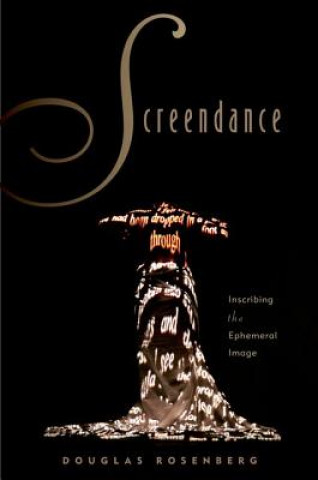
Książka Screendance Douglas Rosenberg

Screendance

Język: Angielski
Oprawa: Twarda
Dostępność: Dostępna u dostawcy
Wysyłamy za 10-18 dni
432.95
The relationship between the practice of dance and the technologies of representation have excited a...


Informacje o książce

Język
Angielski
Oprawa
Książka - Twarda
Data wydania
2012
strony
234
EAN
9780199772612
ISBN
0199772614
Enbook ID
04535856
Waga
518
Wymiary
164 x 245 x 20

Pełny opis

The relationship between the practice of dance and the technologies of representation have excited artists since the advent of film. Dancers, choreographers, and directors are increasingly drawn to screendance, the practice of capturing dance as a moving image mediated by a camera. While the interest in screendance has grown in importance and influence amongst artists, it has until now flown under the academic radar. Emmy-nominated director and auteur Douglas Rosenberg's groundbreaking book considers screendance as both a visual art form as well as an extension of modern and post-modern dance without drawing artificial boundaries between the two. Both a history and a critical framework, Screendance: Inscribing the Ephemeral Image is a new and important look at the subject. As he reconstructs the history and influences of screendance, Rosenberg presents a theoretical guide to navigating the boundaries of an inherently collaborative art form. Drawing on psycho-analytic, literary, materialist, queer, and feminist modes of analysis, Rosenberg explores the relationships between camera and subject, director and dancer, and the ephemeral nature of dance and the fixed nature of film. This interdisciplinary approach allows for a broader discussion of issues of hybridity and mediatized representation as they apply to dance on film. Rosenberg also discusses the audiences and venues of screendance and the tensions between commercial and fine-art cultures that the form has confronted in recent years. The surge of screendance festivals and courses at universities around the world has exposed the friction that exists between art, which is generally curated, and dance, which is generally programmed. Rosenberg explores the cultural implications of both methods of reaching audiences, and ultimately calls for a radical new way of thinking of both dance and film that engages with critical issues rather than simple advocacy.

Możesz być zainteresowany

Emotions in Finance

Jocelyn Pixley
417.34
613.44

Children's Nature

Leslie Paris
508.37
248.73

Voice of the Turtle

Mills Ulrich Mary Mills Ulrich
65.49

Ecopsychology

Craig Chalquist
71.28

Reformation ABCs

Stephen J. Nichols
56.36

Aberdeenshire

Alexander MacKie
79.83

Klienci, którzy kupili tę książkę, kupili również

Chistes Tutifruti

Chistes Tutifruti
34.95
26.70