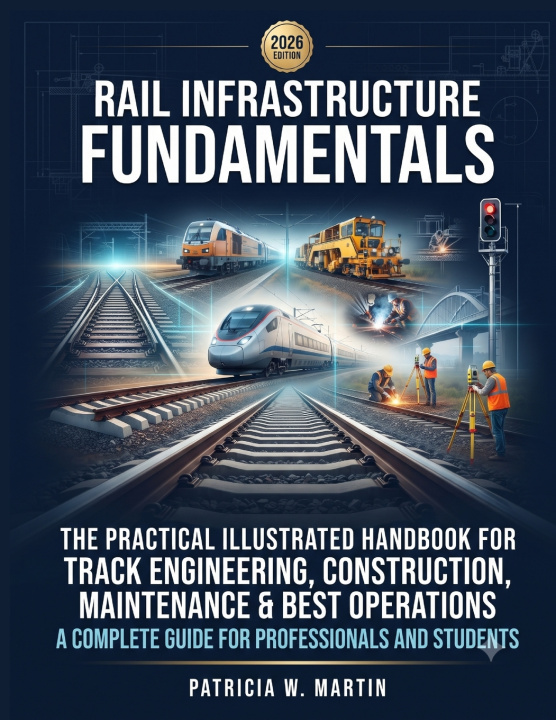
The fastest way to become a more capable railway engineer isn't learning more about one discipline-it's understanding how the entire railway infrastructure system works together.
Do you struggle to understand how track, bridges, signaling, drainage, electrification, and digital systems work together?
Are most railway engineering books either too academic, too expensive, or lacking practical illustrations?
Do you want one modern reference that supports both career progression and day-to-day engineering decisions?
Developed for today's railway professionals, Rail Infrastructure Fundamentals combines practical engineering workflows with systems-level thinking. Rather than focusing on a single discipline, it explains the complete infrastructure lifecycle using clear language, engineering diagrams, inspection guidance, maintenance strategies, real-world examples, and emerging technologies including BIM, Digital Twins, AI-assisted inspection, LiDAR, drone surveying, predictive maintenance, sustainability, and climate-resilient infrastructure.
InsideThis Guide You'll Discover- Railway infrastructure systems explained
- Track engineering fundamentals
- Surveying and route alignment
- Construction planning and sequencing
- Bridges, tunnels and civil structures
- Signaling and train control
- Railway electrification essentials
- Drainage and earthworks
- Asset lifecycle management
- Inspection procedures and checklists
- Maintenance planning workflows
- BIM and Digital Twin applications
- AI, drones and LiDAR in rail engineering
- Sustainability and climate resilience
- Career-building multidisciplinary knowledge
Think railway engineering is too complex? This handbook breaks advanced concepts into practical, illustrated explanations that connect classroom theory with field application.
Already own railway textbooks? This book complements them by bringing together the entire railway infrastructure lifecycle in one accessible reference, emphasizing practical workflows, visual learning, inspection guidance, and modern digital engineering rather than isolated theory.
Whether you're a student, graduate engineer, maintenance professional, or experienced practitioner expanding into new disciplines, the guidance is designed to be immediately useful on projects, during professional development, and as a long-term desktop reference.
If you want to become a more confident and well-rounded railway infrastructure engineer, then add Rail Infrastructure Fundamentals to your professional library today.