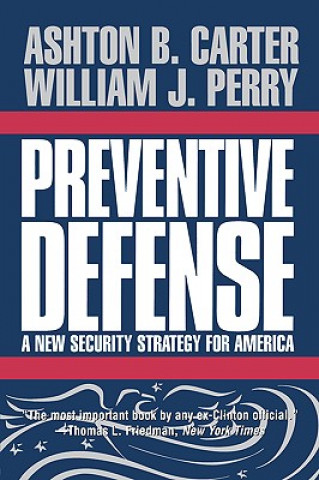
Książka Preventive Defense William J. Perry

Preventive Defense

Język: Angielski
Oprawa: Miękka
Dostępność: Dostępna u dostawcy
Wysyłamy za 9-15 dni
127.52
William J. Perry and Ashton B. Carter, two of the world's foremost defense authorities, draw on thei...


Informacje o książce

Język
Angielski
Oprawa
Książka - Miękka
Data wydania
2000
strony
256
EAN
9780815713074
ISBN
081571307X
Enbook ID
04727461
Waga
412
Wymiary
255 x 154 x 22

Pełny opis

William J. Perry and Ashton B. Carter, two of the world's foremost defense authorities, draw on their experience as leaders of the U.S. Defense Department to propose a new American security strategy for the twenty-first century. After a century in which aggression had to be defeated in two world wars and then deterred through a prolonged cold war, the authors argue for a strategy centered on prevention. Now that the cold war is over, it is necessary to rethink the risks to U.S. security. The A list--threats to U.S. survival--is empty today. The B list--the two major regional contingencies in the Persian Gulf and on the Korean peninsula that dominate Pentagon planning and budgeting--pose imminent threats to U.S. interests but not to survival. And the C list--such headline-grabbing places as Kosovo, Bosnia, Somalia, Rwanda, and Haiti--includes important contingencies that indirectly affect U.S. security but do not directly threaten U.S. interests. Thus the United States is enjoying a period of unprecedented peace and influence; but foreign policy and defense leaders cannot afford to be complacent. The authors' preventive defense strategy concentrates on the dangers that, if mismanaged, have the potential to grow into true A-list threats to U.S. survival in the next century. These include Weimar Russia: failure to establish a self-respecting place for the new Russia in the post-cold war world, allowing it to descend into chaos, isolation, and aggression as Germany did after World War I; Loose Nukes: failure to reduce and secure the deadly legacy of the cold war--nuclear, chemical, and biological weapons in Russia and the rest of the former Soviet Union; A Rising China Turned Hostile: failure to shape China's rise to Asian superpower status so that it emerges as a partner rather than an adversary; Proliferation: spread of weapons of mass destruction; and Catastrophic Terrorism: increase in the scope and intensity of transnational terrorism.They also argue for better management of the defense establishment so the United States will retain a strong military prepared to cope with all contingencies, deter aggressors, and win a conflict if deterrence fails.

Możesz być zainteresowany

Hart Crane

Paul Giles
210.14
471.24

Tom & Jerry

Kevin Costello
45.20

The Little Colonel in Arizona

Annie Fellows Johnston
133.95
275.31
255.93
48.80

Peer to Peer

Michel Bauwens
88.94

Strings

Daniel Nunn
30.09

Reporting the News in China

United States Congress Senate
78.90
128.01
1 391.42

Environmental Footprints of Packaging

Subramanian Senthilkannan Muthu
414.63

Life of Isabel Crawford

Marilyn Fardig Whiteley
130.25

Klienci, którzy kupili tę książkę, kupili również

53.09

Záměr

Zdeňka Jordánová
32.34

Italiani con valigia

Beppe Severgnini
59.32

Goethe-Lexikon

Heinrich Schmidt
135.70
89.14

Vládci času

Lucie Lukačovičová
35.75