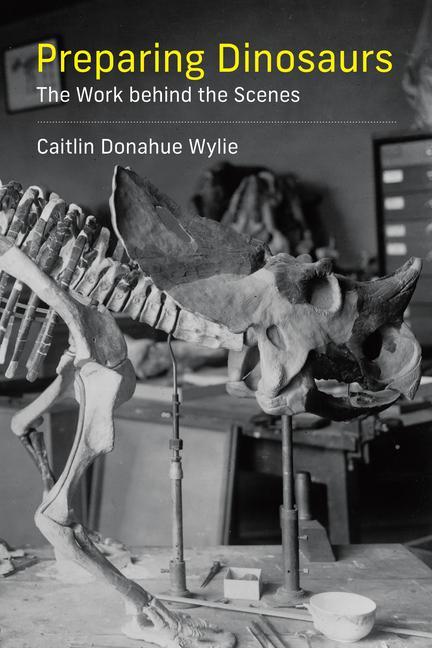
Książka Preparing Dinosaurs Caitlin Donahue Wylie

Preparing Dinosaurs

Język: Angielski
Oprawa: Miękka
Wydawca: MIT Press Ltd
Dostępność: 50 % szansa
Przeszukamy cały świat
366.12
An investigation of the work and workers in fossil preparation labs reveals the often unacknowledged...


Informacje o książce

Język
Angielski
Oprawa
Książka - Miękka
Data wydania
2021
strony
264
EAN
9780262542678
ISBN
0262542676
Enbook ID
35695535
Wydawca
Waga
434
Wymiary
229 x 153 x 19

Pełny opis

An investigation of the work and workers in fossil preparation labs reveals the often unacknowledged creativity and problem-solving on which scientists rely.Those awe-inspiring dinosaur skeletons on display in museums do not spring fully assembled from the earth. Technicians known as preparators have painstakingly removed the fossils from rock, repaired broken bones, and reconstructed missing pieces to create them. These specimens are foundational evidence for paleontologists, and yet the work and workers in fossil preparation labs go largely unacknowledged in publications and specimen records. In this book, Caitlin Wylie investigates the skilled labor of fossil preparators and argues for a new model of science that includes all research work and workers.Drawing on ethnographic observations and interviews, Wylie shows that the everyday work of fossil preparation requires creativity, problem-solving, and craft. She finds that preparators privilege their own skills over technology and that scientists prefer to rely on these trusted technicians rather than new technologies. Wylie examines how fossil preparators decide what fossils, and therefore dinosaurs, look like; how labor relations between interdependent yet hierarchically unequal collaborators influence scientific practice; how some museums display preparators at work behind glass, as if they were another exhibit; and how these workers learn their skills without formal training or scientific credentials.The work of preparing specimens is a crucial component of scientific research, although it leaves few written traces. Wylie argues that the paleontology research community's social structure demonstrates how other sciences might incorporate non-scientists into research work, empowering and educating both scientists and nonscientists.
Możesz być zainteresowany

Field Museum of Natural History Guide

Field Museum of Natural History
79.54
119.27
409.93

Story of Us

Peter Richerson
131.74

Bears of the World

Vincenzo Penteriani
813.26

Cataclysms

Laurent Testot
182.86

Perfect Planet

Huw Cordey
108.95
136.61
95.03

Ice Age

Juergen Ehlers
235.25

Across Atlantic Ice

Dennis J Stanford
169.32

Mesolithic Europe

Geoff Bailey
320.25
119.27

Great Human Diasporas

Luigi Luca Cavalli-Sforza
49.65
114.50

Klienci, którzy kupili tę książkę, kupili również

148.58

Paleontology

David Bainbridge
149.36

Palaeolithic Europe

FRENCH JENNIFER
548.50
730.20
253.26

Fifth Beginning

Dr. Robert L. Kelly
97.85

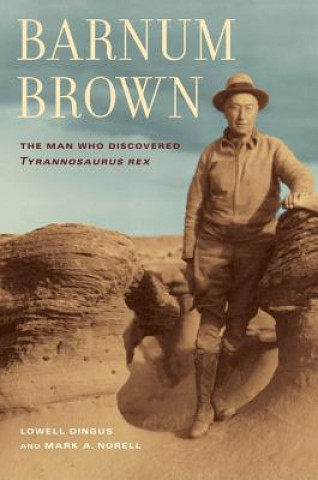
Barnum Brown

Lowell Dingus
280.82

Pale Blue Dot

Carl Sagan
71.07
77.11

Before Civilization

Colin Renfrew
107.59

Extinctions

Michael Hannah
71.07

Great Paleolithic War

David J. Meltzer
48.29

Megafauna

Baz Edmeades
119.27

Ancient Marine Reptiles

Jack M. Callaway
507.89

Rise of Birds

Sankar Chatterjee
278.77

Deep Time

RILEY BLACK
95.03
259.49

Vertebrate Evolution

Donald Prothero
408.77
308.67

American Museum of Natural History

Henry Fairfield 1857-1935 Osborn
79.54