Książka Prenatal Testosterone in Mind Rebecca Knickmeyer

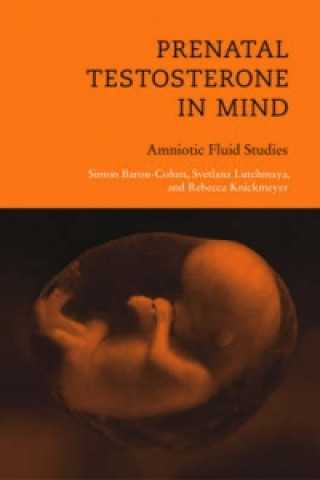
Prenatal Testosterone in Mind

Amniotic Fluid Studies

Język: Angielski
Oprawa: Miękka
Wydawca: Bradford Books
Dostępność: Dostępna u dostawcy
Wysyłamy za 8-11 dni
132.63
This pioneering study looks at the effects of prenatal testosterone on postnatal development and beh...


Informacje o książce

Język
Angielski
Oprawa
Książka - Miękka
Data wydania
2006
strony
144
EAN
9780262524568
Enbook ID
04561892
Wydawca
Waga
181
Wymiary
136 x 203 x 12

Pełny opis

This pioneering study looks at the effects of prenatal testosterone on postnatal development and behavior. Hormonal effects on behavior have long been studied in animals; the unique contribution of this book is to suggest a connection between human fetal hormones and later behavior. It details for the first time testosterone's effect on social and language development, opening a new avenue of research for cognitive neuroscience. The authors look at samples of amniotic fluid taken during amniocentesis at 16 weeks' gestation, and relate the fetal level of testosterone (which is present in fetuses of both sexes, although in different quantities) to behavior at ages 1, 2, and 4 years. They argue that the amniotic fluid provides a window into the child's past -- a chemical record of that child's time in the womb -- that allows informed prediction about the child's future brain, mind, and behavior. This is not the retrospective speculation of psychoanalysis, they point out, but an opportunity to study development prospectively and trace developmental precursors and causes of later cognition. The study suggests that prenatal levels of testosterone affect a range of later behaviors in children, from the inclination to make eye contact with others to the size of the vocabulary. It also suggests that prenatal testosterone level may be related to the development of typically "masculine" and "feminine" behaviors. The study's ongoing research explores whether fetal testosterone has any link with the risk of developing autism. Connecting endocrinology and psychology, the authors propose that there is a biological component to behaviors often thought to be produced by the social environment.

Możesz być zainteresowany

How to be a Tudor

Ruth Goodman
57.72

Jane Eyre

Charlotte Brontë
93.56

Turncoat

Stephen Brumwell
112.21
98.66
427.08

Dream Hunters Epoch

Shirley G East
104.75

Klienci, którzy kupili tę książkę, kupili również

Rumba Mariachi

Fabrice CARO
47.12

Guida di Pompei

Francesco Morlicchio
59.78

UouoUS

Mohammed bin Rashid Al Maktoum
42.31

Metamorphosen

Peter Simonischek
56.25

Vocabulario de evaluación educativa

Santiago Castillo Arredondo
166.70