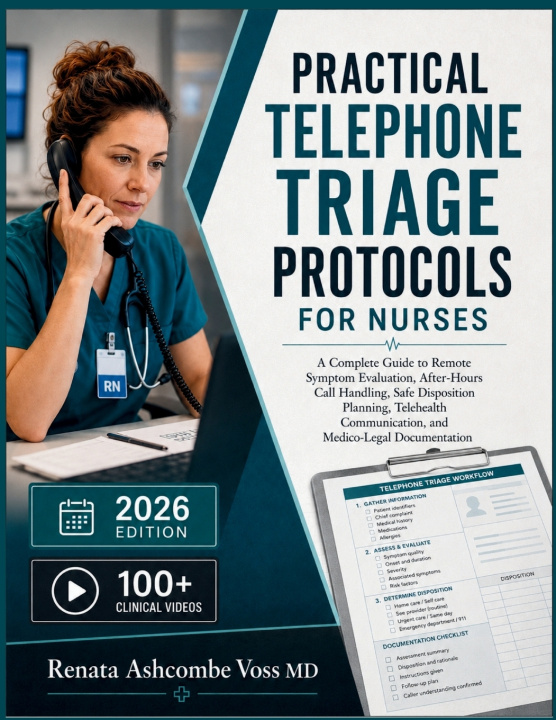
A caller on the line, a symptom half-described, and thirty seconds to decide whether this is an emergency. Telephone triage nurses carry that weight every shift, often with thin protocols and thinner legal cover.
The problem: Most triage training leans on outdated flip-charts or vague call-center scripts that do not hold up when a caller's story does not fit the algorithm, and do not protect the nurse when a bad outcome triggers a chart review.
The agitation: A missed red flag in a five-minute call can mean a delayed stroke workup, a pediatric sepsis case sent to urgent care instead of the emergency department, or a wrongful-death suit built entirely from an undocumented phone note. Nurses are told to use judgment, but judgment without a defensible framework is a liability, not a skill.
The solution: This 2026 edition builds a complete, protocol-driven system for remote nursing practice. Readers get structured interviewing techniques, symptom-specific triage pathways for chest pain, pediatric fever, mental health crises, obstetric complaints, toxicologic emergencies, and chronic disease exacerbations, plus the documentation habits that hold up in a deposition.
- Standardized decision-support algorithms for the highest-risk adult and pediatric presentations
- Medico-legal documentation templates and risk-reduction checklists
- Safe disposition and escalation pathways for after-hours and on-call workflows
- Telehealth communication strategies for video, text, and asynchronous triage
- Clear guidance for older adults, obstetric callers, and equity-sensitive populations
Every chapter includes clinical illustrations built for quick recognition at the point of care, and readers get free access to a companion video course of more than 100 lectures through a QR code printed inside the book. This is a working reference for the nurse who answers the phone, not a theoretical overview.