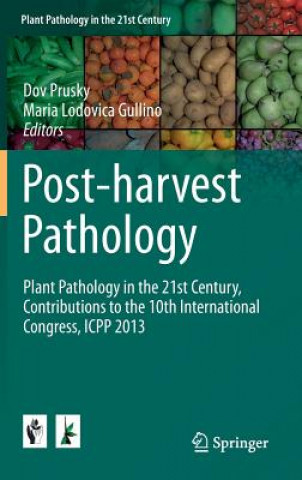
Książka Post-harvest Pathology Dov Prusky

Post-harvest Pathology

Plant Pathology in the 21st Century, Contributions to the 10th International Congress, ICPP 2013

Język: Angielski
Oprawa: Twarda
Dostępność: Dostępna u dostawcy
Wysyłamy za 10-13 dni
641.42
This collection of papers includes some of the presentation given at the International congress of P...

Informacje o książce

Język
Angielski
Oprawa
Książka - Twarda
Data wydania
2014
strony
137
EAN
9783319077000
ISBN
3319077007
Enbook ID
02684267
Waga
3495
Wymiary
155 x 235 x 14

Pełny opis

This collection of papers includes some of the presentation given at the International congress of Plant Pathology held in Beijing in 2013 in the session of Recent Development in Postharvest Pathology. Fruit production for human consumption is an important part of the market economy. Any waste during to spoilage and pest infestation, in the field and the postharvest phase, results in significant economic losses which are more pronounced as the losses occur closer to the time of produce sale. Careful handling of perishable produce is needed for the prevention of postharvest diseases at different stages during harvesting. Handling, transport and storage in order to preserve the high quality produce. The extent of postharvest losses varies markedly depending on the commodities and country estimated to range between 4 and 8% in countries where postharvest refrigeration facilities are well developed to 30% where facilities are minimal. Microbial decay is one of the main factors that determine losses compromising the quality of the fresh produce. For the development of an integrated approach for decay management, cultural, preharvest, harvest and postharvest practices should be regarded as essential components that influence the complex interactions between host, pathogen, and environmental conditions. Orchards practices including preharvest fungicide applications can also directly reduce the development of postharvest fruit decay. Among postharvest practices, postharvest fruit treatments with fungicide are the most effective means to reduce decay. Ideally, these fungicides protect the fruit from infections that occur before treatment, including pathogen causing quiescent infections, as well from infection that are initiated after treatment during postharvest handling, shipment and marketing. The implementation of these alternatives techniques often requires modifying currently used postharvest practices and development of new formulation for their applications.§The present chapters deal with the newest report related to postharvest pathology in the world. §

Możesz być zainteresowany

Food Safety Issues for the 114th Congress

Congressional Research Service
80.19
71.83
64.45
31.97

Words My Grandfather Gave Me

Mart a. Jacob Grams
40.04

Alongside Community

Debra Harkins
233.22
105.48

Cousin Dick.

Lily Tinsley
73.99

Beyond Empowerment

Jeffrey Odell Korgen
83.15

Klienci, którzy kupili tę książkę, kupili również

78.32
69.56
67.10
43.49