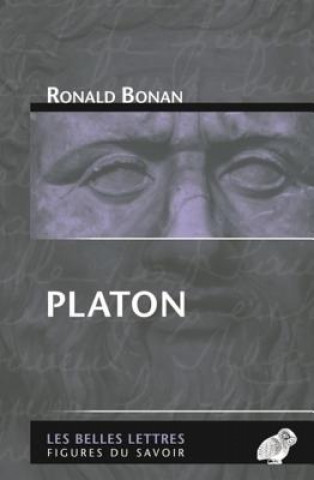
Some view Plato (428/427 BC - 348/347 BC) as the disciple who betrayed his master Socrates, others as someone who could have been a Sophist but would have failed to resolve debates, or even as the advocate of a “world of ideas” in which idealism’s divagations originated, or ultimately as a reactionary aristocrat opposed to democracy’s vulgarities. In short, people may wish to “overthrow Plato,” but such a tenacious vow is offset by the significance of his philosophy, which was not only ground-breaking, but encyclopaedic in scope. The power behind Ronald Bonan’s book is that he managed to find a way for us to embrace its consistency, and to show how the search for humanity’s greatest virtues required, according to Plato, abstracting values from every form of contestation by basing them upon the absolute, thus joining the ethical aim to the seeking of absolutely true knowledge. To the Socratic idea that “to know good is to do good,” Plato added a philosophy of ideas which made Good intelligible while inferring its entire scale of values. Since this is no simple task, Ronald Bonan demonstrates the challenges stemming from this Platonic institutional act: the status of Truth, the prospect of attaining it (or not) through scientific means, the nature of our errors to which our wanderings correspond, and the thorny status of non-being. Before occupying all of Western metaphysics, such difficulties had already thrust Platonism into a crisis and given rise to highly speculative dialogues aimed at overcoming them. Convinced of the philosopher’s political destiny, Plato placed all such problems in the framework of the Polis, which he believed to be humankind’s most effective educational tool (paideia). Therefore politics, no more than ethics, can be separated from ontology. The book thus points out the scientific, ethical and political ramifications of metaphysical theories, before concluding with thoughts on Plato’s posterity and on the main thrusts of his legacy.