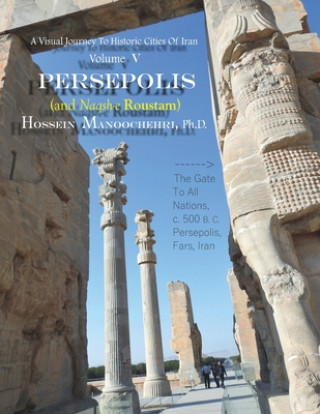
Książka Persepolis And Naqsh-e Roustam Manoochehri Ph.D. Hossein Manoochehri

Persepolis And Naqsh-e Roustam

A Visual Journey To Historic Cities Of Iran Vol. V

Język: Angielski
Oprawa: Miękka
Dostępność: Dostępna u dostawcy
Wysyłamy za 14-21 dni
87.68
Persepolis and Naqsh-e Roustam are two pre-Islamic (before the A.D. 7th century) sites in Iran. They...

Informacje o książce

Język
Angielski
Oprawa
Książka - Miękka
Data wydania
2021
strony
98
EAN
9798469327219
ISBN
846932721Y
Enbook ID
37314915
Waga
337
Wymiary
216 x 279 x 6

Pełny opis

Persepolis and Naqsh-e Roustam are two pre-Islamic (before the A.D. 7th century) sites in Iran. They are located
nearly 30 miles northeast of the city of Shiraaz. During past centuries, Persepolis has continued to be a landmark
for the pre-Islamic civilization in Iran and, therefore, great efforts have been used to protect Persepolis from the
destructive intentions of conquerors of Iran, such as Greeks (c.320 B.C.), Muslims (A.D. 7th century), Tatars and
Mongols (A. D. 13th-15th centuries). (As such, a designer may propose that a pillar, or a column, of Persepolis to
be presented diagonally to impart a potential, dynamic tension for this site.)

The present series seeks to collect images of the survived, architectural features in the historic cities of Iran before
they are completely wiped out in a modernization process.

Because of the use of stone as the main building materials in these two sites, they are in sharp contrast to the clay architecture in Iran. Costruction of the Persepolis Palaces Complex took nearly 100 years from the c.510 B.C. to c.
400 B.C. In 320 B.C., the Persian Empire was defeated by Alexander and Persepolis was conquored by the Greeks.
The wooden ceilings of palaces went into ablaze and only columns and stone walls remained. Still, the skill and
mastership of builders from many nations during the 400 B.C., as a cosmopollitan, architectural feature, are alive
in the stone carvings at different columns as well as in the majistic pillars and columns with the stone statues of
winged bulls. At present, Persepolis Palaces Complex is registered by the UNESCO as a world's heritage site.

This revised (2021) edition of the Volume V of this series invites viewers to A Visual Journey To Persepolis and Naqsh-e Rousatm for a review of the samples of stone architecture in contrast to the mainstream, the clay (or the indigenous), architecture in the historic cities of Iran.

Możesz być zainteresowany

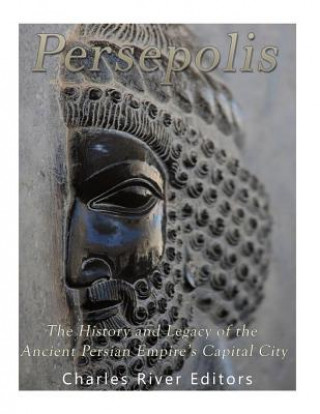
Persepolis

Ali Mousavi
749.00

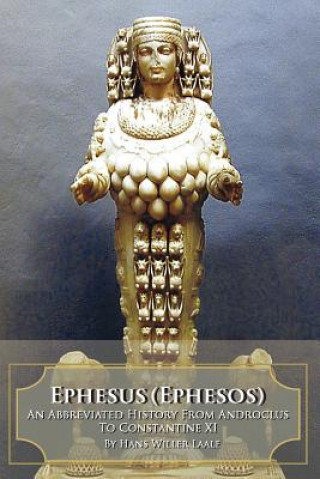
Ephesus (Ephesos)

Hans Willer Laale
112.56

Ranch Girls at Home Again

Margaret Vandercook
78.52

Phantom Africa

Michel Leiris
207.13
60.11
51.05
52.84

Persepolis Illustrata

MULTIPLE CONTRIBUTOR
113.06
89.47
87.88

Jim Mortimore

Agnes F. Vandome
508.32

Klienci, którzy kupili tę książkę, kupili również

Gateway to Arabic Extension

Imran Hamza Alawiye
37.71

Gateway to Arabic

Imran Alawiye
37.71

Gateway to Arabic

Imran Alawiye
37.71

Gateway to Arabic

Imran Alawiye
37.71

Gateway to Arabic

Imran Alawiye
37.71

Advanced Media Arabic

El Mustapha Lahlali
195.78

Eggregori

Eliphas Levi
49.66

Mirazur Redux

MAURO COLAGRECO
223.25

Paměť míst

Csaba Szaló
41.50

Naruto 28

Masashi Kishimoto
31.64

Einfach weiter!

Nicole Fernandes
120.03
85.79