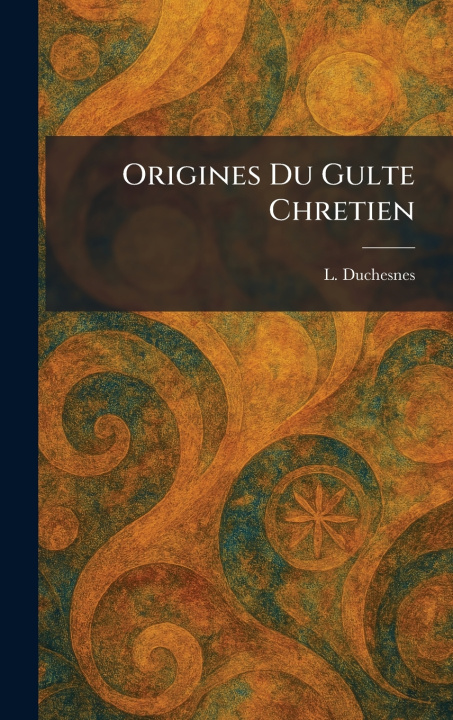
"Origines du culte chrétien" est une Åuvre magistrale de l'historien et prélat Louis Duchesne, consacrée à l'étude approfondie de la liturgie latine avant l'époque de Charlemagne. Ce traité historique explore l'évolution des rites, des cérémonies et des pratiques sacramentelles au sein de l'Église d'Occident durant ses premiers siècles. À travers une analyse rigoureuse des textes anciens, l'auteur retrace le développement de la messe, de l'office divin, des fêtes religieuses et de l'administration des sacrements.
Cet ouvrage se distingue par son approche scientifique et documentaire, jetant une lumière indispensable sur les racines de la tradition liturgique chrétienne. Duchesne examine les influences régionales, les transformations graduelles du culte et l'organisation de la hiérarchie ecclésiastique primitive. Destiné tant aux historiens qu'aux théologiens, ce livre demeure une référence incontournable pour comprendre comment les formes du culte se sont structurées avant l'unification carolingienne. Sa contribution à l'histoire de l'Église et à la philologie liturgique en fait un texte essentiel du patrimoine intellectuel chrétien.
This work has been selected by scholars as being culturally important, and is part of the knowledge base of civilization as we know it. This work was reproduced from the original artifact, and remains as true to the original work as possible. Therefore, you may see the original copyright references, library stamps (as most of these works have been housed in our most important libraries around the world), and other notations in the work.
This work is in the public domain in the United States of America, and possibly other nations. Within the United States, you may freely copy and distribute this work, as no entity (individual or corporate) has a copyright on the body of the work.
As a reproduction of a historical artifact, this work may contain missing or blurred pages, poor pictures, errant marks, etc. Scholars believe, and we concur, that this work is important enough to be preserved, reproduced, and made generally available to the public. We appreciate your support of the preservation process, and thank you for being an important part of keeping this knowledge alive and relevant.