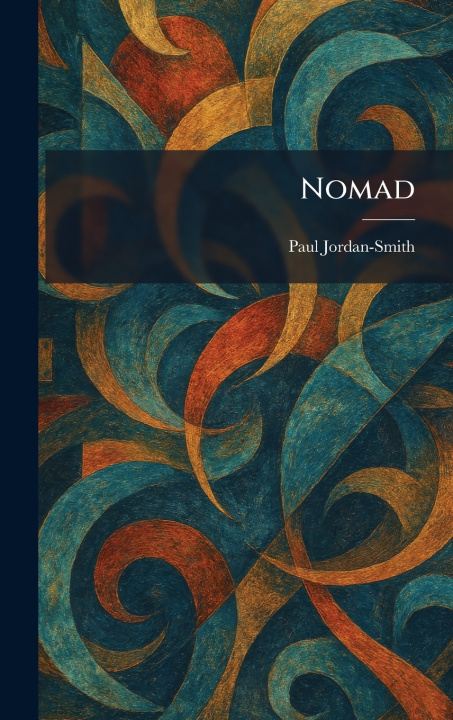
"Nomad" is a compelling work of fiction by Paul Jordan-Smith that captures the restless spirit of the early twentieth century. The novel explores the intellectual and spiritual odyssey of a protagonist who finds himself adrift in a world of shifting values and social upheaval. Through sharp prose and keen observation, Jordan-Smith presents a narrative that is both a psychological study and a satirical examination of contemporary culture.
The story follows its central character as he traverses various social strata and ideological landscapes, seeking a sense of belonging and purpose. As a nomad of the mind, the protagonist's journey reflects the broader disillusionment and search for authenticity prevalent in post-war society. Jordan-Smith, known for his erudition and critical wit, weaves a tale that delves into the complexities of human desire, the limitations of traditional institutions, and the enduring quest for personal identity.
With its rich characterizations and thoughtful exploration of philosophical themes, "Nomad" stands as a significant example of mid-1920s American literature. It offers readers a window into the intellectual anxieties of its era while maintaining a timeless relevance in its portrayal of the individual's struggle against social conformity and the search for meaningful existence.
This work has been selected by scholars as being culturally important, and is part of the knowledge base of civilization as we know it. This work was reproduced from the original artifact, and remains as true to the original work as possible. Therefore, you may see the original copyright references, library stamps (as most of these works have been housed in our most important libraries around the world), and other notations in the work.
This work is in the public domain in the United States of America, and possibly other nations. Within the United States, you may freely copy and distribute this work, as no entity (individual or corporate) has a copyright on the body of the work.
As a reproduction of a historical artifact, this work may contain missing or blurred pages, poor pictures, errant marks, etc. Scholars believe, and we concur, that this work is important enough to be preserved, reproduced, and made generally available to the public. We appreciate your support of the preservation process, and thank you for being an important part of keeping this knowledge alive and relevant.