Książka Molotov Geoffrey Roberts

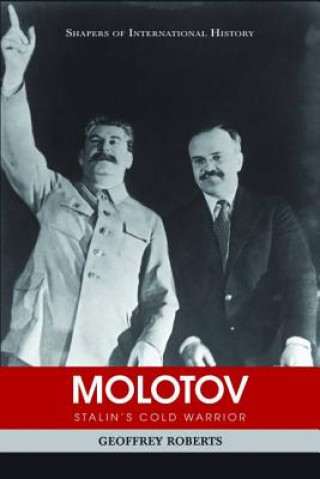
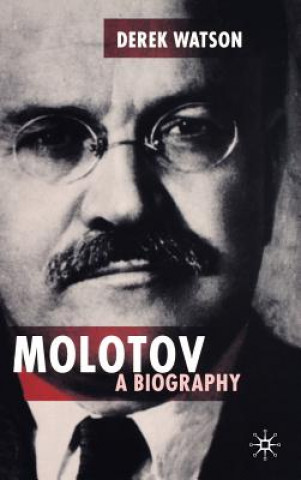
Molotov

Język: Angielski
Oprawa: Twarda
Dostępność: Dodruk
Termin nieznany
153.62
This title reassesses Molotov's role in the Cold War, overturning former notions of Molotov as the c...
Informacje o książce

Język
Angielski
Oprawa
Książka - Twarda
Data wydania
2009
strony
254
EAN
9781574889451
ISBN
1574889451
Enbook ID
04433383
Waga
524
Wymiary
251 x 163 x 23

Pełny opis

This title reassesses Molotov's role in the Cold War, overturning former notions of Molotov as the consummate bureaucrat. It provides a new appreciation of the difficulty of achieving detente between the Soviet Union and the West. It is based on extensive research and the author's access to hundreds of Molotov's files in Russian party, state, and foreign ministry archives. The orthodox view of Vyacheslav Molotov is that he was no more than Stalin's faithful servant, a dogmatic communist, and a conservative hard-liner of little or no imagination. Molotov was, indeed, Stalin's right-hand man; from the 1920s to the early 1950s the two men presided over a brutal, authoritarian communist system that resulted in the deaths of millions of people. But there was far more to their partnership. In this engaging biography, Geoffrey Roberts proposes a radical reappraisal of Molotov's life and career. He argues that although Molotov, as Soviet foreign minister since 1939, was certainly Stalin's cold warrior, he personally preferred detente and peaceful coexistence with the West. The differences and tensions between Molotov and Stalin came to a head in 1949, when Molotov's wife was arrested and imprisoned because of her involvement with the Soviet Jewish Anti-Fascist Committee. Molotov was removed as foreign minister but was reappointed to the post after the dictator's death in 1953. In 1957 Molotov was ousted from the leadership following his attempted coup against Nikita Khrushchev, Stalin's successor as the leader of the Soviet Communist Party. After Stalin's death, Molotov revived his efforts to curtail the Cold War and campaigned for the establishment of a pan-European system of collective security that would halt the polarization of the continent into competing military-political blocs. While Molotov's attempt to negotiate an end of the Cold War were stymied by Soviet and Western hard-liners, his campaign for European collective security paved the way to detente in the 1960s and 1970s and the abolition of the Cold War in the 1980s and 1990s.

Możesz być zainteresowany

722.18
48.77

Spirit of Place

Charles Maclean
87.32
47.60

See You Soon

Lexie Axelson
71.06

Gift from the Sea

Anne Morrow Lindbergh
57.43
137.94
48.09

Cosa Nostra

John Dickie
83.13
89.07

Genius of the Thames

Thomas Love Peacock
70.38
309.29

Hungarians

Paul Lendvai
89.36

Klienci, którzy kupili tę książkę, kupili również

61.81

Antonio Gramsci

Wolfram Klein
39.42

Dům z karet

Michael Dobbs
52.86

Dragon Ball 13

Akira Toriyama
30.95

Harry Potter y el cáliz de fuego

Joanne Kathleen Rowling
61.52

Nestratiť sa sama sebe

Zuzana Čaputová
75.25
38.93
38.74
95.69