Książka Methods In Arabidopsis Research Csaba Koncz

Methods In Arabidopsis Research

Język: Angielski
Oprawa: Twarda
Dostępność: 50 % szansa
Przeszukamy cały świat
813.80
One of the ways to make consistent progress in a particular field of biology consists in choosing a...


Informacje o książce

Język
Angielski
Oprawa
Książka - Twarda
Data wydania
1992
strony
496
EAN
9789810209049
ISBN
9810209045
Enbook ID
05064057
Waga
660

Pełny opis

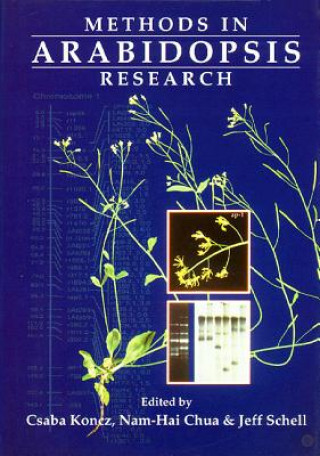
One of the ways to make consistent progress in a particular field of biology consists in choosing a good model system on which to focus the experimental efforts of the scientific community. It has taken a long time for scientists interested in various aspects of the life of plants to reach some sort of consensus. With the advent and impact of molecular biology, the small weed Arabidopsis is now the object of rapidly growing scientific attention. Since it is reasonable to assume that the general molecular mechanisms that are responsible for the physiological, cellular and biochemical properties of plants will be essentially conserved in all plants, it follows that these mechanisms should also operate in Arabidopsis and hence that its genome should contain most of the genes that we need to know about if we want to understand the genetic determination of the life processes in plants. Arabidopsis has a small genome and well documented genetic studies are available. It is easy to grow in large numbers and mutants defining important genetically controlled mechanisms are either available, or can readily be obtained. Various methods to introduce and express isolated homologous or heterologous genes are available. It is therefore realistic and desirable to aim at exploring the genome of this plant in very great detail. As will be illustrated in this book all the elements for such a grand strategy are in place. More and more scientists are therefore willing to accept the obvious and very real practical disadvantages resulting from its small size when experiments call for the isolation of proteins, membranes, subcellular fractions etc, in order to benefit from its extraordinary experimental advantages as a model system in molecular genetics. One can safely predict that in the next decade studies with Arabidopsis will provide major breakthroughs in our understanding of most aspects of plant physiology and developmental biology. The importance of this knowledge for plant breeding and therefore for a sustainable highly productive agriculture cannot be overestimated. We therefore expect that this book will provide valuable guidelines to all those who are planning experiments aimed at understanding various aspects of plant growth, productivity and interactions with the environment. The book offers a wealth of methodical and theoretical information as well as valuable references. It should be of use to students, teachers, as well as advanced researchers and those breeders who want to use molecular techniques in breeding.

Możesz być zainteresowany

256.30

Traditional Wicca

Thorn Mooney
66.38
54.93

Rave Culture

Tammy L. Anderson
129.59

Klienci, którzy kupili tę książkę, kupili również

38.41
32.84
141.23
92.76

Válszd a szeretetet!

Stormie Omartian
46.18

Nic mě nezlomí

David Goggins
54.74