Książka Masked Dispatches Center for Cryptologic History

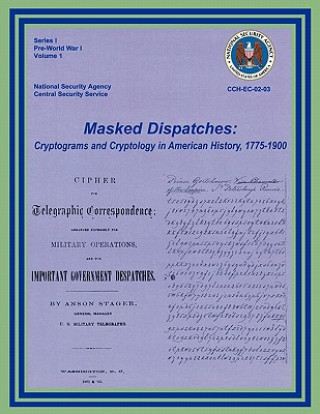
Masked Dispatches

Cryptograms and Cryptology in American History, 1775-1900

Język: Angielski
Oprawa: Miękka
Dostępność: Dostępna u dostawcy
Wysyłamy za 14-21 dni
136.88
The art and science of code-making and code-breaking is driven both by the risk inherent in an adver...


Informacje o książce

Język
Angielski
Oprawa
Książka - Miękka
Data wydania
2011
strony
234
EAN
9781780390086
ISBN
9781780390086
Enbook ID
08840032
Waga
553
Wymiary
280 x 216 x 12

Pełny opis

The art and science of code-making and code-breaking is driven both by the risk inherent in an adversary's ability to read an intercepted communication and the technology available to mitigate that threat efficiently and cost-effectively. This is true both for today's computer-driven cryptography and cryptanalysis and the simpler, yet no less vital codes and ciphers used in the past. In "Masked Dispatches: Cryptograms and Cryptology in American History, 1775-1900", the beginnings of American cryptography are portrayed as rooted in the nation's origin in revolutionary conspiracy. Although the technology consisted of the use of messenger and hand-written correspondence or signals ("One if by land, two if by sea"), the risks of detection and betrayal of secrets was just as great as in the present day. "Masked Dispatches" presents some of the Founding Fathers as active participants in spycraft. America's first espionage code was devised by Benjamin Tallmadge, General George Washington's director of secret service, for use by a spy ring set up in New York in 1778. Another chapter discusses Washington's supplying of invisible ink to Tallmadge. Not surprisingly, Thomas Jefferson's contribution to the world of codes and ciphers was a mechanical device - a wheel cylinder. Once America won its independence, it continued to rely on the devices and methods used in the Revolutionary period. During the Civil War, both sides employed ciphers which, although not much in advance of those used in the 18th century, generally succeeded in keeping their secrets. Spies in the field, such as the Union's Elizabeth Van Lew in Richmond, used simple yet effective substitution systems, while even Abraham Lincoln dabbled in primitive types of encryption. Whether recounting the cryptographic efforts of prominent Americans or the more mundane role of successive diplomatic codes in keeping State Department transactions confidential, "Masked Dispatches" provides both fascinating narrative details and extensive examples of encrypted dispatches and cipher systems. This unique view of America's early history will prove invaluable to diplomatic and military historians as well as anyone intrigued by spycraft, codes, and ciphers.

Możesz być zainteresowany

116.93

Shamanism in Siberia

Mally Stelmaszyk
876.64

Becoming Myself

Irvin D. Yalom
68.29
58.36
73.95
152.17
140.66
457.23
137.08
345.85

Close Quarters

Shamara Ray
75.34

Bet

Paul Sabin
90.42

Klienci, którzy kupili tę książkę, kupili również

64.12
148.10
37.42
131.03