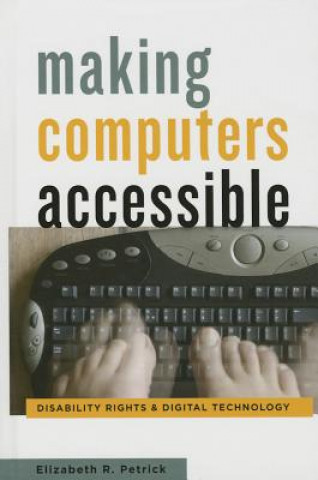
Książka Making Computers Accessible Elizabeth R. Petrick

Making Computers Accessible

Disability Rights and Digital Technology

Język: Angielski
Oprawa: Twarda
Dostępność: Dostępna u dostawcy w małych ilościach
Wysyłamy za 11-15 dni
236.08
In 1974, not long after developing the first universal optical character recognition technology, Ray...

Informacje o książce

Język
Angielski
Oprawa
Książka - Twarda
Data wydania
2015
strony
208
EAN
9781421416465
ISBN
1421416468
Enbook ID
09083609
Waga
410
Wymiary
236 x 160 x 19

Pełny opis

In 1974, not long after developing the first universal optical character recognition technology, Raymond Kurzweil struck up a conversation with a blind man on a flight. Kurzweil explained that he was searching for a use for his new software. The blind man expressed interest: One of the frustrating obstacles that blind people grappled with, he said, was that no computer program could translate text into speech. Inspired by this chance meeting, Kurzweil decided that he must put his new innovation to work to "overcome this principal handicap of blindness." By 1976, he had built a working prototype, which he dubbed the Kurzweil Reading Machine. This type of innovation demonstrated the possibilities of computers to dramatically improve the lives of people living with disabilities. In Making Computers Accessible, Elizabeth R. Petrick tells the compelling story of how computer engineers and corporations gradually became aware of the need to make computers accessible for all people. Motivated by user feedback and prompted by legislation such as the Americans with Disabilities Act, which offered the promise of equal rights via technological accommodation, companies developed sophisticated computerized devices and software to bridge the accessibility gap. People with disabilities, Petrick argues, are paradigmatic computer users, demonstrating the personal computer's potential to augment human abilities and provide for new forms of social, professional, and political participation. Bridging the history of technology, science and technology studies, and disability studies, this book traces the psychological, cultural, and economic evolution of a consumer culture aimed at individuals with disabilities, who increasingly rely on personal computers to make their lives richer and more interconnected.

Możesz być zainteresowany

423.49
43.70

Countess Kate

Charlotte Mary Yonge
42.44
32.41
945.71
31.63
106.69

Klienci, którzy kupili tę książkę, kupili również

63.08

Sir Prise

The Little Band from Gingerland
72.91

Faded Love

Ellie McLaren
40.59