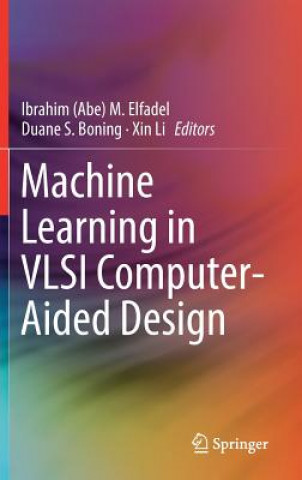
Książka Machine Learning in VLSI Computer-Aided Design Ibrahim (Abe) M. Elfadel

Machine Learning in VLSI Computer-Aided Design

Język: Angielski
Oprawa: Twarda
Dostępność: Dostępna u dostawcy
Wysyłamy za 10-13 dni
830.04
This book provides readers with an up-to-date account of the use of machine learning frameworks, met...


Informacje o książce

Język
Angielski
Oprawa
Książka - Twarda
Data wydania
2019
strony
694
EAN
9783030046651
Enbook ID
20403119
Waga
1232
Wymiary
155 x 235 x 44

Pełny opis

This book provides readers with an up-to-date account of the use of machine learning frameworks, methodologies, algorithms and techniques in the context of computer-aided design (CAD) for very-large-scale integrated circuits (VLSI). Coverage includes the various machine learning methods used in lithography, physical design, yield prediction, post-silicon performance analysis, reliability and failure analysis, power and thermal analysis, analog design, logic synthesis, verification, and neuromorphic design. From the Foreword As the semiconductor industry embraces the rising swell of cognitive systems and edge intelligence, this book could serve as a harbinger and example of the osmosis that will exist between our cognitive structures and methods, on the one hand, and the hardware architectures and technologies that will support them, on the other. The value proposition of automation is that it compresses schedules, reduces costs, and eliminates human errors. In the case of VLSI CAD, the automation has achieved not only these objectives but also the infinitely more important outcome of a seamless implementation of a positive feedback loop whereby computers are used to design more powerful computers. This positive feedback loop is the invisible hand of Moore's law. As we transition from the computing era to the cognitive one, it behooves us to remember the success story of VLSI CAD and to earnestly seek the help of the invisible hand so that our future cognitive systems are used to design more powerful cognitive systems. This book is very much aligned with this on-going transition from computing to cognition, and it is with deep pleasure that I recommend it to all those who are actively engaged in this exciting transformation. Dr. Ruchir Puri IBM Fellow, IBM Watson CTO & Chief Architect IBM T. J. Watson Research Center

Możesz być zainteresowany

Windrush Child

Benjamin Zephaniah
35.93
311.93
78.61

Star Dunes

Trudi Trueit
57.91
42.57
159.38
819.59
152.05

Modern Mocktails

Keli Rivers
71.29

Klienci, którzy kupili tę książkę, kupili również

Niente di vero

Veronica Raimo
80.47
246.01
41.89
65.82

Der Lauf der Natur

Margaux Samson-Abadie
92.87
41.89
31.83
302.46
34.07
87.60
106.35