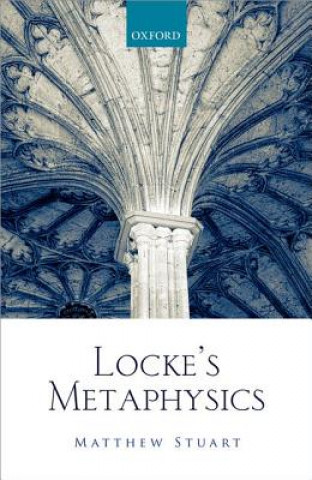
Książka Locke's Metaphysics Stuart

Locke's Metaphysics

Język: Angielski
Oprawa: Twarda
Dostępność: Na zamówienie
Wysyłamy za 17-26 dni
812.94
Though John Locke set out to write a book that would resolve questions about the origin and scope of...
Informacje o książce

Język
Angielski
Oprawa
Książka - Twarda
Data wydania
2013
strony
542
EAN
9780199645114
ISBN
0199645116
Enbook ID
02520618
Waga
950
Wymiary
175 x 244 x 35

Pełny opis

Though John Locke set out to write a book that would resolve questions about the origin and scope of human knowledge, his Essay Concerning Human Understanding is also a profound contribution to metaphysics, full of arguments about the fundamental features of bodies, the notions of essence and kind, the individuation of material objects, personal identity, the nature and scope of volition, freedom of action, freedom of will, and the relationship between matter and mind. Matthew Stuart examines a broad range of these arguments, and explores the relationships between them. He offers fresh interpretations of such familiar material as the distinction between primary and secondary qualities, and Locke's account of personal identity; and he also takes us deeper into less familiar territory, including Locke's case against materialism and his philosophy of action. Locke's Metaphysics shows Locke to be a more consistent, systematic and interesting metaphysician than is generally appreciated. It defends him against charges of muddling the definition of 'quality', of waffling between two conceptions of secondary qualities, and of vacillating in his commitment to mechanism. It shows how his rejection of essentialism leads him to embrace relativism about identity, and that his relativism about identity is the key to defending his account of personal identity against several objections. Yet the picture of Locke that emerges is not always a familiar one. Stuart's account reveals that he is a philosopher who denies the existence of relations, who takes bodies to be colored only so long as we are looking at them, and who is not committed to mechanism. He shows that Locke takes persons to be three-dimensional beings whose pasts are 'gappy' rather than continuous. Finally, he shows that Locke is a volitionist who holds that we can will only our own thoughts and bodily motions, and not such episodes as lighting a candle or turning the pages of a book.

Możesz być zainteresowany

199.96

Book of Mirdad

Mikhail Naimy
50.18

Safari Adventure

Willard Price
36.21
127.43
869.03

Powered by Honda

R Dave Nelson
71.63

Aquaponics Bacteria

Timothy Tripp
11.50

Moon Called

Patricia Briggs
52.74
78.82
272.58

The Runner

Peter May
49.29
71.63

Man Of War

Allan Mallinson
70.94
214.72
32.47

Anxiety Disorders

Brian F. Shaw
214.72
97.91

Balthus

Nicholas Fox Weber
80.69

Czechs And Germans

Elizabeth Wiskemann
164.92

Klienci, którzy kupili tę książkę, kupili również

České variace

Zdeněk Dragoun
21.64

Die blinde Frau, die sehen kann

Vilaynur S. Ramachandran
82.26

Auswuchttechnik

Klaus Federn
679.30
562.00