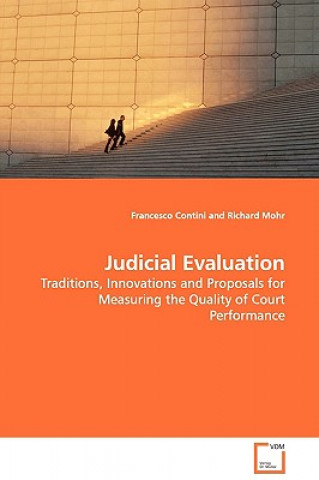
Książka Judicial Evaluation Francesco Contini

Judicial Evaluation

Traditions, Innovations and Proposals for Measuring the Quality of Court Performance

Język: Angielski
Oprawa: Miękka
Wydawca: VDM Verlag
Dostępność: Dostępna u dostawcy
Wysyłamy za 14-21 dni
256.25
Can courts and judges be evaluated? Or are the ideals§of justice incompatible with quality measureme...


Informacje o książce

Język
Angielski
Oprawa
Książka - Miękka
Data wydania
2008
strony
136
EAN
9783639069860
ISBN
3639069862
Enbook ID
06816292
Wydawca
Waga
191
Wymiary
152 x 229 x 7

Pełny opis

Can courts and judges be evaluated? Or are the ideals§of justice incompatible with quality measurement?§These questions are addressed by research into the§experience of nine European countries. Issues of§independence and accountability are analysed by§examining the role of the courts as a branch of§government that maintains legitimacy and authority as§well as providing a public service. This appreciation§broadens the conception of accountability, while§highlighting that independence is but a means to the§end of impartiality. The interests, values and§traditions of the law, public management and civil§society are each recognised as being relevant to§judicial evaluation. The criteria proposed for the§effective evaluation of courts include a respect for§the core values and roles of courts, a meaningful§place for all actors, including the public, and means§to ensure that evaluations have consequences in the§day to day operations of justice systems. Drawing on§practical examples, the book concludes with proposals§that may enhance impartiality, accountability and§democracy in the administration of justice. Can courts and judges be evaluated? Or are the ideals of justice incompatible with quality measurement? These questions are addressed by research into the experience of nine European countries. Issues of independence and accountability are analysed by examining the role of the courts as a branch of government that maintains legitimacy and authority as well as providing a public service. This appreciation broadens the conception of accountability, while highlighting that independence is but a means to the end of impartiality. The interests, values and traditions of the law, public management and civil society are each recognised as being relevant to judicial evaluation. The criteria proposed for the effective evaluation of courts include a respect for the core values and roles of courts, a meaningful place for all actors, including the public, and means to ensure that evaluations have consequences in the day to day operations of justice systems. Drawing on practical examples, the book concludes with proposals that may enhance impartiality, accountability and democracy in the administration of justice.

Możesz być zainteresowany

Water Changes

Bobbie Kalman
39.35
80.88

David's Reading Log

Martha Day Zschock
65.63

1Q84

Haruki Murakami
66.32

Play with Fire

William Shaw
91.51

The Art of Combat

Joachim Meyer
109.91
84.72
55.49

Darkfever

Karen Marie Moning
32.76

Sacred Sexual Union

Anaiya Sophia
56.38
78.32

Klienci, którzy kupili tę książkę, kupili również

80.59
82.65
100.46
42.40
83.83