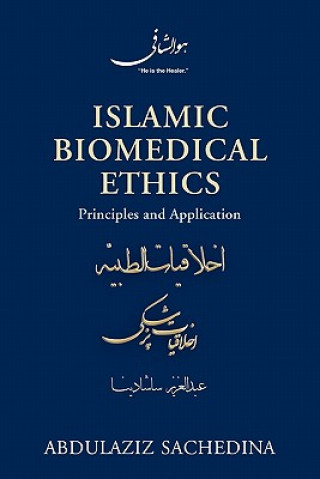
Książka Islamic Biomedical Ethics Abdulaziz Abdulhussein Sachedina

Islamic Biomedical Ethics

Principles and Application

Język: Angielski
Oprawa: Miękka
Dostępność: Dostępna u dostawcy
Wysyłamy za 10-18 dni
142.36
Biomedical ethics is a burgeoning academic field with complex and far-reaching consequences. Whereas...
Informacje o książce

Język
Angielski
Oprawa
Książka - Miękka
Data wydania
2012
strony
296
EAN
9780199860234
ISBN
0199860238
Enbook ID
04536398
Waga
436
Wymiary
158 x 233 x 15

Pełny opis

Biomedical ethics is a burgeoning academic field with complex and far-reaching consequences. Whereas in Western secular bioethics this subject falls within larger ethical theories and applications (utilitarianism, deontology, teleology, and the like), Islamic biomedical ethics has yet to find its natural academic home in Islamic studies. In this pioneering work, Abdulaziz Sachedina - a scholar with life-long academic training in Islamic law - relates classic Muslim religious values to the new ethical challenges that arise from medical research and practice. He depends on Muslim legal theory, but then looks deeper than juridical practice to search for the underlying reasons that determine the rightness or wrongness of a particular action. Drawing on the work of diverse Muslim theologians, he outlines a form of moral reasoning that can derive and produce decisions that underscore the spirit of the Shari'a. These decisions, he argues, still leave room to revisit earlier decisions and formulate new ones, which in turn need not be understood as absolute or final. After laying out this methodology, he applies it to a series of ethical questions surrounding the human life-cycle from birth to death, including such issues as abortion, euthanasia, and organ donation. The implications of Sachedina's work are broad. His writing is unique in that it aims at conversing with Jewish and Christian ethics, moving beyond the Islamic fatwa literature to search for a common language of moral justification and legitimization among the followers of the Abrahamic traditions. He argues that Islamic theological ethics be organically connected with the legal tradition of Islam to enable it to sit in dialogue with secular and scripture-based bioethics in other faith communities. A breakthrough in Islamic bioethical studies, this volume is welcome and long-overdue reading for anyone interested in facing the difficult questions posed by modern medicine not only to the Muslim faithful but to the ethically-minded at large.

Możesz być zainteresowany

1 588.58
1 099.90

Klienci, którzy kupili tę książkę, kupili również

Blaugast

Paul Leppin
49.17