Książka Innocent Eye Nico Orlandi

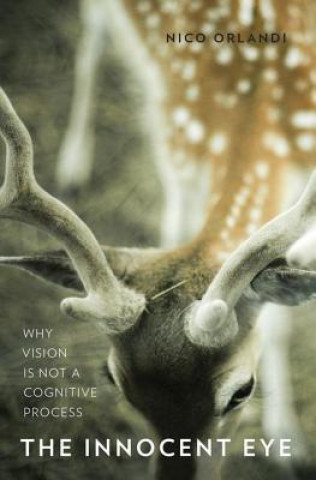
Innocent Eye

Why Vision Is Not a Cognitive Process

Autor: Nico Orlandi
Język: Angielski
Oprawa: Twarda
Dostępność: Dostępna u dostawcy
Wysyłamy za 10-18 dni
287.49
Why does the world look to us as it does? Generally speaking, this question has received two types o...

Informacje o książce

Autor
Język
Angielski
Oprawa
Książka - Twarda
Data wydania
2014
strony
272
EAN
9780199375035
ISBN
0199375038
Enbook ID
04532379
Waga
490
Wymiary
157 x 243 x 23

Pełny opis

Why does the world look to us as it does? Generally speaking, this question has received two types of answers in the cognitive sciences in the past fifty or so years. According to the first, the world looks to us the way it does because we construct it to look as it does. According to the second, the world looks as it does primarily because of how the world is. In The Innocent Eye, Nico Orlandi defends a position that aligns with this second, world-centered tradition, but that also respects some of the insights of constructivism. Orlandi develops an embedded understanding of visual processing according to which, while visual percepts are representational states, the states and structures that precede the production of percepts are not representations. If we study the environmental contingencies in which vision occurs, and we properly distinguish functional states and features of the visual apparatus from representational states and features, we obtain an empirically more plausible, world-centered account. Orlandi shows that this account accords well with models of vision in perceptual psychology - such as Natural Scene Statistics and Bayesian approaches to perception - and outlines some of the ways in which it differs from recent 'enactive' approaches to vision. The main difference is that, although the embedded account recognizes the importance of movement for perception, it does not appeal to action to uncover the richness of visual stimulation. The upshot is that constructive models of vision ascribe mental representations too liberally, ultimately misunderstanding the notion. Orlandi offers a proposal for what mental representations are that, following insights from Brentano, James and a number of contemporary cognitive scientists, appeals to the notions of de-coupleability and absence to distinguish representations from mere tracking states.

Możesz być zainteresowany

Your SIBO Solution

Cindy Stewart
75.64

Savage of the Night

Latoya Nicole
61.13

Ship Design

Apostolos Papanikolaou
1 026.62

Consuming Behaviours

RAPPAPORT ERIKA
888.47

Methods of Ethics

Henry Sidgwick
228.39
335.77

"Getting by"

Donald M. Nonini
201.71

ABC Workbook Ages 3-5

Collins Easy Learning
21.21
113.22

Paris Letter

Jon Robin Baitz
55.87
688.89

No Milk Today

Andrew Ward
122.56
68.82

Houston Chef's Table

Arthur L. Meyer
74.57
327.99

Little Weirds

Jenny Slate
57.24

Importance of Assent

Jan-Willem van der Rijt
423.49
87.32

Managing Identity

Alison Pullen
470.91

Klienci, którzy kupili tę książkę, kupili również

Love, theoretically

Christine Strüh
62.88

Josef Koudelka

Koudelka josef
74.76

Gangsta-Oma

David Walliams
63.17
66.58

22 Bahnen

Caroline Wahl
52.17
27.83

Worte meines Herzens

Christine Nietschke
73.79
113.22
145.64

Ksiuty z Melpomena

Wiech Stefan Wiechecki
17.71
165.20
53.83

Rhodesian Ridgeback

Annette Schmitt
91.90