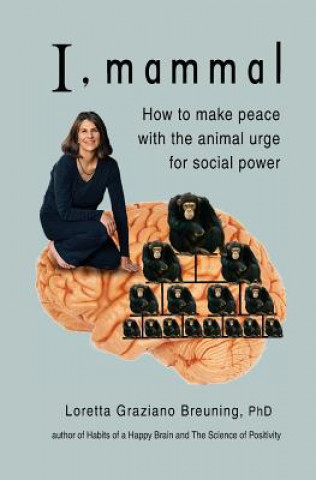
Książka I, Mammal Loretta Graziano Breuning

I, Mammal

Język: Angielski
Oprawa: Miękka
Dostępność: Dostępna u dostawcy
Wysyłamy za 14-21 dni
53.43
Mammals seek dominance because it stimulates their happy chemicals. An appetite for status develops...


Informacje o książce

Język
Angielski
Oprawa
Książka - Miękka
Data wydania
2011
strony
302
EAN
9781941959008
ISBN
9781941959008
Enbook ID
10818017
Waga
362
Wymiary
205 x 134 x 18

Pełny opis

Mammals seek dominance because it stimulates their happy chemicals. An appetite for status develops as naturally as the appetite for food and sex. Status hierarchies emerge spontaneously as each individual strives to meet their needs and avoid harm. You would never think this way in words, but your mammal brain uses neurochemicals instead of words. When you understand the private lives of animals, your neurochemical ups and downs make sense. You have inherited the operating system that helped mammals thrive for millions of years. Nothing is wrong with us. We are mammals. You may say you're "against status." But if you filled a room with people who said they were anti-status, a hierarchy would soon form based on how anti-status they are. That's what mammals do. Our neurochemical ups and downs make sense when you look at the private lives of animals. The field notes of a primatologist are eerily similar to the lyrics of a country western song. A biology textbook resembles a soap opera script. The mammal brain cannot put its reactions into words, so the human cortex struggles to make sense of the limbic system it's attached to. We can finally make sense of our hybrid brain thanks to an accumulation of research in animal science and neuroscience. The frustrations of social hierarchies are not caused by "our society." We are simply heirs to the brain that helped mammals thrive for two hundred million years. It's not easy being human with a mammalian operating system. But when you understand the neurochemistry of mammals, you can stop focusing on our flaws and simply celebrate how well we do with the mental equipment we've got. Mammals live in groups for protection from predators, but group life can be frustrating. Some herd mates always seem to get the best mating opportunities and foraging spots. Fortunately, the mammal brain evolved to handle this. It releases stress chemicals when a mammal needs to hold back to avoid conflict. And it emits happy chemicals- serotonin, dopamine, oxytocin and endorphins, when a mammal sees a way to forge ahead and meet its needs.

Możesz być zainteresowany

36.21

Open Studio

Amanda Benchley
344.91
65.63

Williams Hematology

Marshall A. Lichtman
1 128.34

Kingsbane

Claire Legrand
37.98

Well of Ascension

Brandon Sanderson
37.48

Writings 1997-2003

Cybernetic Culture Research Unit (CCRU)
105.29
80.39
41.22
37.98

World of Flowers

Johanna Basford
57.36

Why We Sleep

Matthew Walker
57.17

Navigating the Labyrinth

Laura Sebastian-Coleman
96.04
231.74

A Taste of Poison

Tessonja Odette
84.33
41.91
42.90
56.48

Klienci, którzy kupili tę książkę, kupili również

Science of Positivity

Loretta Graziano Breuning
65.63

Habits of a Happy Brain

Loretta Graziano Breuning
49.29

Tame Your Anxiety

Loretta Graziano Breuning
82.95
58.74

Sapiens

Yuval Noah Harari
50.67
88.95

Social Strategy

Mikolaj Jan Piskorski
96.04