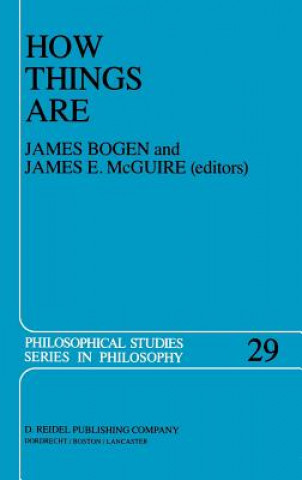
Książka How Things Are J. Bogen

How Things Are

Studies in Predication and the History of Philosophy and Science

Język: Angielski
Oprawa: Twarda
Wydawca: Springer
Dostępność: Dostępna u dostawcy w małych ilościach
Wysyłamy za 13-18 dni
722.38
One of the earliest and most influential treatises on the subject of this volume is Aristotle's Cate...


Informacje o książce

Język
Angielski
Oprawa
Książka - Twarda
strony
345
EAN
9789027715838
ISBN
9027715831
Enbook ID
01971017
Wydawca
Waga
1500
Wymiary
155 x 235 x 24

Pełny opis

One of the earliest and most influential treatises on the subject of this volume is Aristotle's Categories. Aristotle's title is a form of the Greek verb for speaking against or submitting an accusation in a legal proceeding. By the time of Aristotle, it also meant: to signify or to predicate. Surprisingly, the "predicates" Aristotle talks about include not only bits of language, but also such nonlinguistic items as the color white in a body and the knowledge of grammar in a man's soul. (Categories I/ii) Equally surprising are such details as Aristotle's use of the terms 'homonymy' and 'synonymy' in connection with things talked about rather than words used to talk about them. Judging from the evidence in the Organon, the Metaphysics, and elsewhere, Aristotle was both aware of and able to mark the distinction between using and men tioning words; and so we must conclude that in the Categories, he was not greatly concerned with it. For our purposes, however, it is best to treat the term 'predication' as if it were ambiguous and introduce some jargon to disambiguate it. Code, Modrak, and other authors of the essays which follow use the terms 'linguistic predication' and 'metaphysical predication' for this.

Możesz być zainteresowany

43.80
64.93
731.53

Life Not Easy: You Must Work

Motivation For Work
31.44
290.21
64.93
61.03
49.93
317.76

Klienci, którzy kupili tę książkę, kupili również

147.87
296.05