Książka Hate Crimes Kimberley Potter

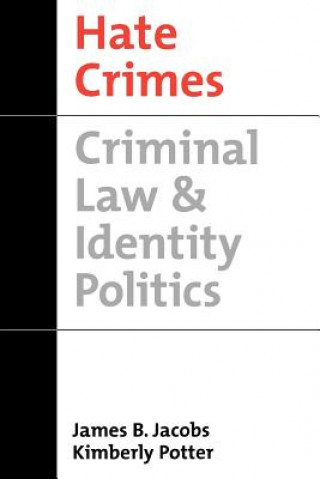
Hate Crimes

Criminal Law and Identity Politics

Język: Angielski
Oprawa: Miękka
Dostępność: Dostępna u dostawcy
Wysyłamy za 10-18 dni
121.88
In the early 1980s, a new category of crime appeared in the criminal law lexicon. In response to con...

Informacje o książce

Język
Angielski
Oprawa
Książka - Miękka
Data wydania
2001
strony
222
EAN
9780195140545
ISBN
0195140540
Enbook ID
04864083
Waga
354
Wymiary
151 x 233 x 14

Pełny opis

In the early 1980s, a new category of crime appeared in the criminal law lexicon. In response to concerted advocacy-group lobbying, Congress and many state legislatures passed a wave of "hate crime" laws requiring the collection of statistics on, and enhancing the punishment for, crimes motivated by certain prejudices. This book places the evolution of the hate crime concept in socio-legal perspective. James B. Jacobs and Kimberly Potter adopt a skeptical if not critical stance, maintaining that legal definitions of hate crime are riddled with ambiguity and subjectivity. No matter how hate crime is defined, and despite an apparent media consensus to the contrary, the authors find no evidence to support the claim that the United States is experiencing a hate crime epidemic--instead, they cast doubt on whether the number of hate crimes is even increasing. The authors further assert that, while the federal effort to establish a reliable hate crime accounting system has failed, data collected for this purpose have led to widespread misinterpretation of the state of intergroup relations in this country. The book contends that hate crime as a socio-legal category represents the elaboration of an identity politics now manifesting itself in many areas of the law. But the attempt to apply the anti-discrimination paradigm to criminal law generates problems and anomalies. For one thing, members of minority groups are frequently hate crime perpetrators. Moreover, the underlying conduct prohibited by hate crime law is already subject to criminal punishment. Jacobs and Potter question whether hate crimes are worse or more serious than similar crimes attributable to other anti-social motivations. They also argue that the effort to single out hate crime for greater punishment is, in effect, an effort to punish some offenders more seriously simply because of their beliefs, opinions, or values, thus implicating the First Amendment. Advancing a provocative argument in clear and persuasive terms, Jacobs and Potter show how the recriminalization of hate crime has little (if any) value with respect to law enforcement or criminal justice. Indeed, enforcement of such laws may exacerbate intergroup tensions rather than eradicate prejudice.

Możesz być zainteresowany

Latinos

Marcelo Suarez-Orozco
169.29
35.82
49.74
192.56
1 145.88

Detox Fashion

Subramanian Senthilkannan Muthu
240.46
64.93

Movieland

Fischbach Harry Harman
80.41
170.27
96.47

Queen

Mark Hodkinson
49.64
90.05
105.04

Klienci, którzy kupili tę książkę, kupili również

33.48

Budapest Katalógus

Szöllősi Mátyás
50.13
88.49

Gacar Gocar

Vivek Shanbhag
46.04

GELÓS DE VIDA

CELDONI FONOLL
97.35
104.36

Ogni mattina a Jenin

Susan Abulhawa
63.37

Otto Dix

Cordula Gries
183.51