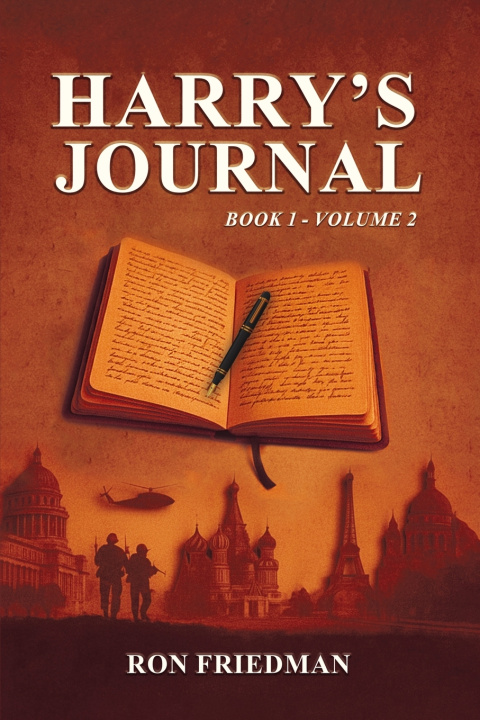
He spent thirty years proving how the world actually works. He was right. That was the worst part.
Honduras, 1973. Harry is a Peace Corps administrator with an empty desk and a talent for being wherever things happen. When an international agency funds polio vaccine for every child in the country under the age of twelve, Harry runs the program. It is a triumph. There is publicity. He is a local hero.
Twenty years pass before he learns what was in the vials.
Volume II of Harry's Journal follows its narrator out of formation and into consequence: Washington dining rooms where the senators are recognized and the invisible men are not; a rainy evening in Lisbon; a house on N Street; an office three rungs from the top of American intelligence. Harry has a theory - that coups, rigged elections, engineered markets, and quiet epidemics are not accidents but inventory. He has spent his life proving it. He has also spent his life serving it, and loving the woman who may sit at its center.
Spanning Iran-Contra, the long shadow of Watergate, Paris, Lisbon, Tegucigalpa, and the private rooms of American power, this is espionage written the way it is actually lived - in cafés and corridors, in the pause before a lie, in a thirty-year friendship that may have been an operation all along. A literary spy novel about complicity: what an intelligent man will refuse to see, and what his refusal costs people he will never meet.
For readers of John le Carré, Charles McCarry, and Alan Furst - thrillers written in sentences.