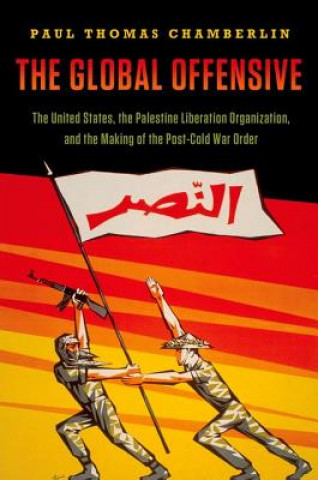
Książka Global Offensive Paul Thomas Chamberlin

Global Offensive

The United States, the Palestine Liberation Organization, and the Making of the Post-Cold War Order

Język: Angielski
Oprawa: Twarda
Dostępność: Dostępna u dostawcy
Wysyłamy za 10-18 dni
195.80
In 1968, a ragtag group of Palestinian guerrillas burst onto the world stage as part of a global off...

Informacje o książce

Język
Angielski
Oprawa
Książka - Twarda
Data wydania
2012
strony
336
EAN
9780199811397
ISBN
0199811393
Enbook ID
04536135
Waga
570
Wymiary
164 x 235 x 27

Pełny opis

In 1968, a ragtag group of Palestinian guerrillas burst onto the world stage as part of a global offensive that combined controversial armed operations, diplomacy, and revolutionary politics. In the following years, the Palestine Liberation Organization (PLO) forced the question of Palestine to the forefront of the world's attention and cement its status as the sole legitimate representative of a nation of people striving for statehood. While their spectacular acts of revolutionary violence - hijackings, guerrilla attacks, suicide operations - seized headlines and made the PLO the face of "international terrorism" in the 1970s, it would be the organization's diplomatic campaign that would propel it to prominence in the global arena. By the middle years of the decade, the PLO would stand beside Vietnamese, Cuban, Algerian, and South African guerrilla fighters at the vanguard of a new generation of revolutionaries in the Third World. More than just a subplot in the Arab-Israeli conflict, the Palestinian struggle sat the juncture of a critical phase in the Cold War and the wave of revolutions that swept through the Third World in the 1960s. Using Arabic sources and recently declassified U.S. documents, The Global Offensive returns the PLO's story to its international context. As the PLO gained both prestige and infamy, leaders in both the United States and the Soviet Union hastened to come to terms with this new force in Middle Eastern affairs. Fearing the PLO's potential to revolutionize the Arab world and project armed violence across a global spectrum, American leaders faced the choice of establishing diplomatic relations with the organization or crafting a containment policy for a new generation of Arab revolutionaries. Their decisions--along with those of Palestinian, Arab, and Israeli leaders--would have dramatic implications into the twenty-first century and help to remake the art of revolution and the structure of global power in the late-Cold War world and beyond. However, despite its sweeping victories in the international system, the Palestinian liberation struggle would not gain statehood in the twentieth century.

Możesz być zainteresowany

Global Offensive

Paul Thomas Chamberlin
167.88

Making Change

Phillip Charles Karpinski
64.87
48.72
38.70

Copyright Basics

Library of Congress Copyright Office
27.71
60.10

Klienci, którzy kupili tę książkę, kupili również