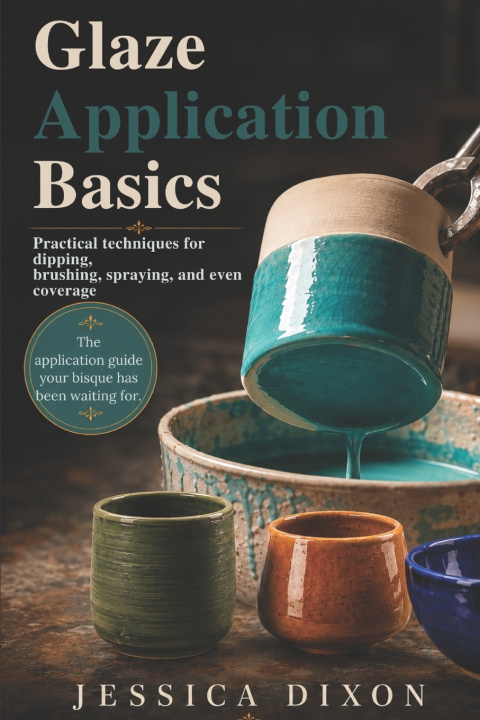
You open the kiln. Your heart drops. The glaze ran off the rim and pooled at the foot. It's patchy on one side, bare on the other, and the color looks nothing like the sample chip. You followed the instructions. So what happened?
Most glazing instruction skips the part you actually need: what's happening between the moment glaze touches bisque and the moment the kiln cools. It hands you steps without principles. It works fine when everything goes right, then goes silent when it doesn't.
This book fills that gap.
It's written for the potter who can make work they're proud of, but has come to dread the final step. You don't need a chemistry background. You don't need a professional studio. What you need is a clear mental model of how glaze behaves during application, and a set of techniques you can trust.
Inside, you'll find:
- Why dry bisque pulls moisture from liquid glaze, and how that one physical process governs every application method you'll ever use
- A quick-start chapter that gets a mug glazed and into the kiln before the book goes deep, so you build confidence immediately
- How to read a glaze bucket in thirty seconds and know whether it's ready to use or needs attention
- The test tile system that prevents you from gambling on finished work with unfamiliar glazes
- Brushing techniques that produce even coverage without visible brushstrokes
- Dipping methods for consistent thickness, including how to handle drips, tong marks, and complex shapes
- Pouring strategies for tall forms and interiors you can't reach any other way
- Spraying setups that work with basic equipment, no professional booth required
- How to layer glazes without creating runs, and how to predict interactions before firing
- Wax resist and edge-cleaning methods for crisp lines and clean foot rings
- Dry-glaze diagnosis: which surface flaws fire out, which ones don't, and when to wash it all off
- Kiln loading principles that protect your glazed ware from sticking to shelves or neighboring pieces
- A systematic approach to reading fired results so each kiln opening teaches you something you can use next time
What makes this book different:
Most glaze books teach from the perspective of the material. This one teaches from your perspective: standing at the bucket, brush in hand, wondering if you're about to ruin a piece you spent weeks forming. Every explanation builds from what you can see, feel, and control right now. The bonus section goes further: it shows one glaze applied by brush, dip, pour, and spray to identical tiles, fired together, so you can see how method shapes outcome. That comparison alone is worth the price of the book.
This book is complete on its own. At the end, I've included an optional bonus resource for readers who want to go further.
If you're tired of guessing, tired of wasting bisque, and ready to glaze with intention instead of hope, this is the book that gets you there.