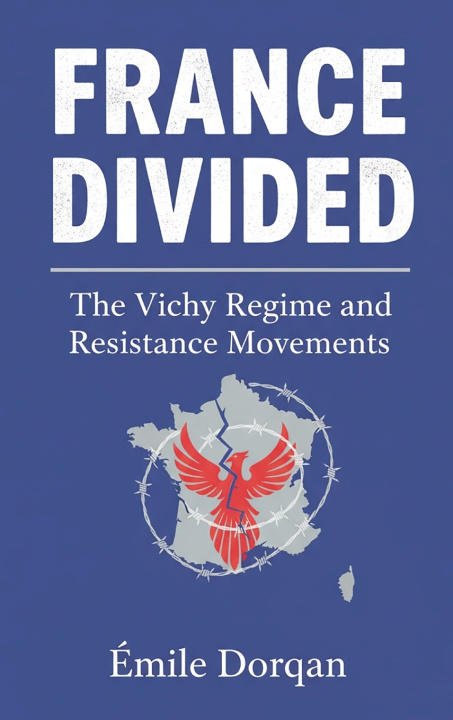
In 1940, France acquired a government that spoke the language of national salvation while accepting a national unmaking. The Vichy regime claimed legality, order, and protection; the resistance claimed the nation's future without the state's visible tools of rule. France Divided follows that struggle as a contest over legitimacy - not as a morality play, but as the building and breaking of political systems under occupation.
Émile Dorqan examines how authority was produced through institutions and practices: prefects and paperwork, policing and informants, rationing systems, courts, and a relentless battle for attention. He shows how policing and surveillance and propaganda and censorship worked together to narrow the space of possible action, while also revealing the cracks where refusal could grow. Against this, resistance movements developed underground logistics as a form of governance: forged documents, safe houses, courier routes, intelligence channels, and the difficult work of building trust under infiltration and fear. The book keeps regional variation in view, explaining why collaboration pressures and resistance opportunities differed across zones, professions, and communities.
Written for general readers, students, and historians of modern Europe, France Divided offers a structured way to evaluate collaboration and legitimacy without flattening human motives into either excuse-making or condemnation. Readers will come away understanding how compliance becomes normal, how dissent becomes organised, and why the post-Liberation reckoning could never be only about punishment: it was also about restoring a credible national story after years when "France" itself had been contested, enforced, and redefined.