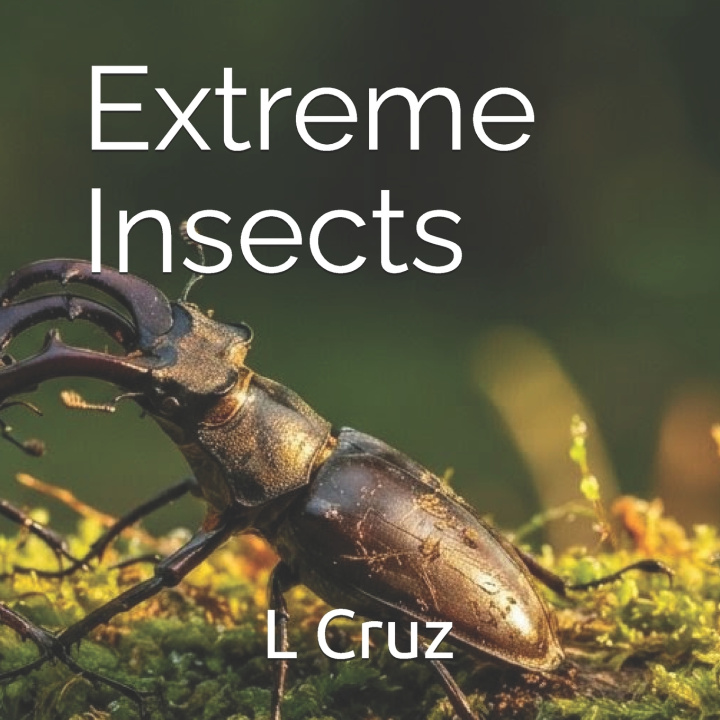
Insects are the most successful animal group in the history of life on Earth, more successful than dinosaurs, more successful than every mammal that ever lived, outnumbering humans roughly 1.4 billion to one.
Scientists have formally identified more than a million insect species, with millions more still waiting to be discovered in rainforest canopies, ocean sediment, and the soil beneath our feet. And they got here first: the earliest insects appeared 385 million years ago, long before the first dinosaurs, and 300 million years before any human ancestor stood upright. During the Carboniferous period, dragonflies with two-foot wingspans patrolled prehistoric forests while nearly every other land animal alive today had yet to evolve.
This book goes far beyond bug facts. Readers discover how insect bodies are engineered like nothing else on Earth, how some species rebuild their entire bodies from scratch, how insect societies organize with more coordination than most human institutions, and why insects' rapid disappearance may be one of the most serious, most overlooked crises of our time. Along the way: 87% of flowering plants, including most of the fruits, vegetables, and nuts we eat, depend on insects for pollination, and insects form the base of the food web that birds, fish, reptiles, and mammals all rely on.
Every chapter pairs vivid, photoreal illustrations with real science: eye-popping FACT boxes, WEIRD BUT TRUE oddities, hands-on FIELD MISSIONS, and SCIENCE CONNECTION callouts linking every creature back to core science concepts.
Written for ages 8-11 at Reading Level 3-4 and aligned to NGSS and Common Core standards, Extreme Insects is built for kids who think bugs are equal parts gross and amazing - and for parents and teachers who want that curiosity backed by real science.
Book 4 in the Extreme Animals Series, collect Extreme Sharks, Extreme Dinosaurs, and Extreme Ocean Animals to build the complete field guide to nature's most extreme creatures.