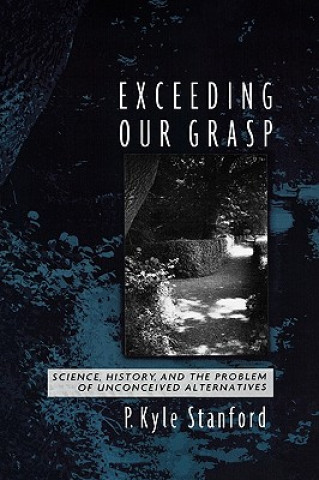
Książka Exceeding Our Grasp P. Kyle Stanford

Exceeding Our Grasp

Science, History, and the Problem of Unconceived Alternatives

Język: Angielski
Oprawa: Twarda
Dostępność: Dostępna u dostawcy
Wysyłamy za 10-18 dni
346.79
The incredible achievements of modern scientific theories lead most of us to embrace scientific real...


Informacje o książce

Język
Angielski
Oprawa
Książka - Twarda
Data wydania
2006
strony
248
EAN
9780195174083
ISBN
0195174089
Enbook ID
04516359
Waga
508
Wymiary
165 x 241 x 22

Pełny opis

The incredible achievements of modern scientific theories lead most of us to embrace scientific realism: the view that our best theories offer us at least roughly accurate descriptions of otherwise inaccessible parts of the world like genes, atoms, and the big bang. In Exceeding Our Grasp, Stanford argues that careful attention to the history of scientific investigation invites a challenge to this view that is not well represented in contemporary debates about the nature of the scientific enterprise. The historical record of scientific inquiry, Stanford suggests, is characterized by what he calls the problem of unconceived alternatives. Past scientists have routinely failed even to conceive of alternatives to their own theories and lines of theoretical investigation, alternatives that were both well-confirmed by the evidence available at the time and sufficiently serious as to be ultimately accepted by later scientific communities. Stanford supports this claim with a detailed investigation of the mid-to-late 19th century theories of inheritance and generation proposed in turn by Charles Darwin, Francis Galton, and August Weismann.He goes on to argue that this historical pattern strongly suggests that there are equally well-confirmed and scientifically serious alternatives to our own best theories that remain currently unconceived. Moreover, this challenge is more serious than those rooted in either the so-called pessimistic induction or the underdetermination of theories by evidence, in part because existing realist responses to these latter challenges offer no relief from the problem of unconceived alternatives itself. Stanford concludes by investigating what positive account of the spectacularly successful edifice of modern theoretical science remains open to us if we accept that our best scientific theories are powerful conceptual tools for accomplishing our practical goals, but abandon the view that the descriptions of the world around us that they offer are therefore even probably or approximately true.

Możesz być zainteresowany

43.90
143.53

Bed of Roses

Nora Roberts
31.71

Salsa Stories

Lulu Delacre
34.73

Progress in Linguistics

Manfred Bierwisch
450.32

Deniable Death

Gerald Seymour
34.04
56.00

The Dear Wife

Jennifer Peel
64.88
202.17

SCOTUS and COVID

Timothy R. Johnson
449.63

Technology, Learning, and Innovation

Linsu KimRichard R. Nelson
639.52
57.56

Iphigenia

Euripides
100.01

Computing Natural Language

Atocha Aliseda-Llera
133.19

Klienci, którzy kupili tę książkę, kupili również

Školní detektiv

Zuzana Pospíšilová
32.19
84.69
101.47

Felsefenin Ilkeleri

René Descartes
66.54
79.91
199.05