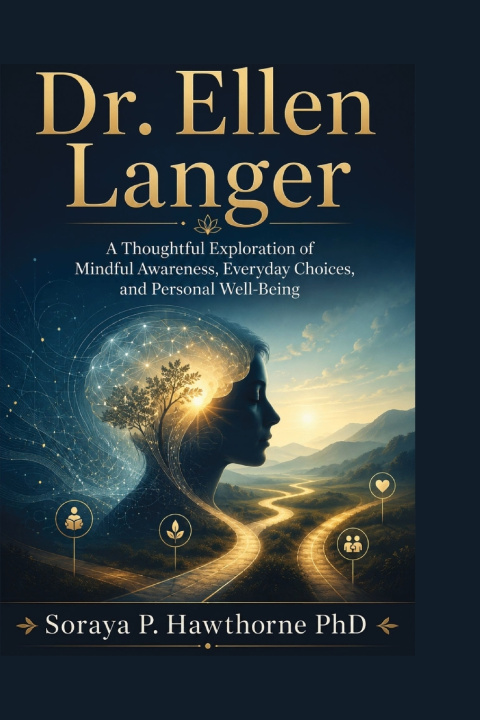
What if the greatest barrier to a more meaningful life is not a lack of ability, opportunity, or knowledge, but the habit of moving through each day without truly noticing it?
A Thoughtful Exploration of Mindful Awareness, Everyday Choices, and Personal Well-Being examines the influential psychological ideas that have challenged people to reconsider how attention, expectations, habits, and personal beliefs shape daily experience. Written in clear and accessible language, this book explores how mindful awareness can help individuals move beyond automatic thinking and become more active participants in their own lives.
Through a careful discussion of psychological research and relatable everyday situations, readers will discover how unnoticed routines can influence behaviour, why fixed labels can limit personal growth, and how looking at familiar situations from a fresh perspective may reveal new possibilities. The book also examines the connection between expectations and behaviour, showing how beliefs can affect confidence, stress responses, decision-making, motivation, and physical well-being.
The discussion extends into important areas of life, including ageing, work, family relationships, emotional health, and personal goals. Readers will learn why having meaningful choices can strengthen motivation, how curiosity can reduce conflict, and why active awareness is essential for building stronger connections with others. The book also presents a balanced exploration of mind-body research, carefully separating encouraging scientific findings from exaggerated claims.
Rather than presenting mindfulness as an escape from responsibility or a practice limited to quiet meditation, this thoughtful guide shows how awareness can become part of ordinary living. It can appear in the way a person listens during a conversation, responds to uncertainty, questions an old belief, adapts to change, or makes one small but meaningful choice.
This book does not promise that positive thinking can remove every hardship or physical limitation. Instead, it offers a realistic and scientifically informed message: people may not control every event, but they can become more aware of the assumptions, expectations, and habits influencing their responses.
Ideal for readers interested in psychology, mindfulness, personal development, ageing, stress management, and the relationship between the mind and body, this independent exploration offers practical insight into living with greater flexibility, curiosity, and intention.
A more fulfilling life may not begin with a dramatic transformation. It may begin with the simple decision to pause, look again, and notice what has been overlooked.